Can I Patch My Own Roof? The Risks of DIY Roof Repair
A tube of roofing caulk looks like a cheap fix for a leak — but most DIY patches fail fast. Here is why, and what actually works.
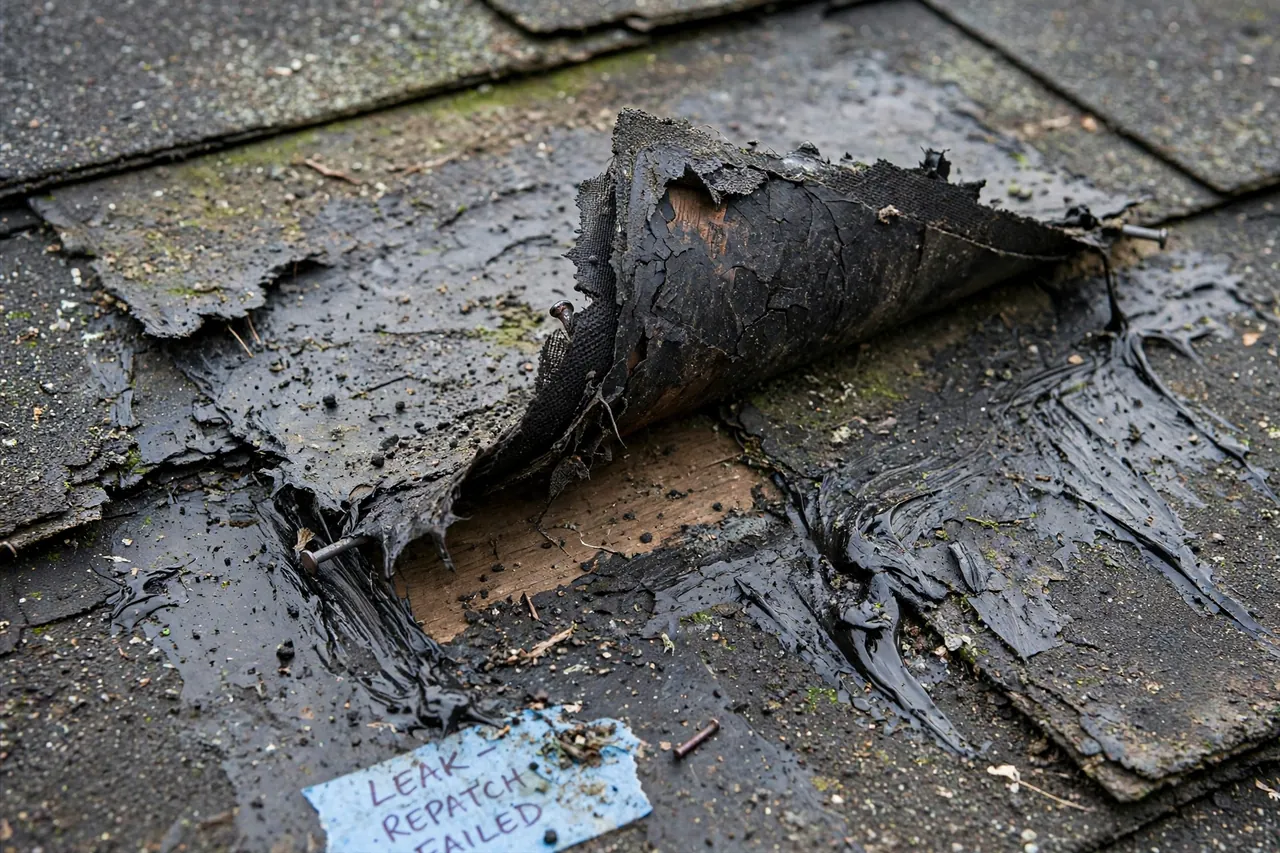
You can press a temporary patch onto a small, easy-to-reach roof leak in an emergency — but most DIY roof patches fail, often within weeks. The reason is straightforward: the spot where water drips into your living room is rarely the spot where water gets into your roof. A repair that lasts has to find the actual entry point, which usually means tracing the leak through the attic, replacing failed flashing or underlayment, and weaving new shingles into the old ones. That takes training, the right materials, and safe roof access.
Wilmington homeowners run into this every storm season. A nor’easter rolls up the Delaware coast, a brown stain blooms on the bedroom ceiling, and the hardware-store fix looks tempting. Before you climb a ladder with a caulk gun, it helps to understand what a patch can and cannot do — and where DIY efforts tend to go wrong on the steep, older roofs that make up so much of Wilmington’s housing stock.
Why does water show up far from the actual leak?
Water is a traveler. It gets in at one point — a cracked pipe boot, a gap in step flashing, a lifted shingle — then runs downhill underneath the shingles along the underlayment or roof decking until it finds a seam, a nail hole, or the edge of a rafter to drip from. By the time it stains your ceiling, it may have traveled ten or fifteen feet from the entry point.
This is the single biggest reason DIY patches fail. A homeowner sees a stain above the dining room, climbs up, and smears roofing tar on the shingles directly above it. But the real breach is up at the chimney flashing or in the valley two sections over, and water keeps flowing in behind the patch. The stain may even pause for a week — just long enough to feel like a win — then return with the next heavy rain.
Professional roofers start in the attic, not on the roof. They trace staining on the underside of the decking uphill to the entry point, then confirm it from above. If you are dealing with a roof leak in Wilmington, that diagnostic step is the whole game — and it is the step a tube of caulk skips entirely.
What goes wrong with typical DIY patches?
Most homeowner patches fail in one of a few predictable ways. First is the material itself. All-purpose caulk and roofing cement do not bond well to the mineral-granule surface of asphalt shingles. They sit on top, shrink and crack as the roof heats and cools through Delaware’s freeze-thaw cycles, and let water right back in. Worse, a thick smear of tar can trap moisture underneath it, quietly rotting the decking it was supposed to protect.
Second is placement. Shingles shed water as a system — each course overlaps the one below, and nails sit hidden under the overlap. A DIY patch nailed through the face of a shingle, or "high-nailed" where the next course cannot cover the fasteners, creates brand-new penetrations. The next nor’easter catches those lifted edges and peels them back.
Third is the mismatch problem. The shingles at the hardware store rarely match your roof’s profile, thickness, or color — and mixing a thin three-tab patch into an architectural shingle roof leaves a weak, visible spot that sheds water poorly. Layer enough of these patches over the years and you end up with a lumpy section a roofer eventually has to cut out entirely before a real repair can begin.
Is it actually safe to get on your own roof?
Roofing has one of the highest fall-injury rates of any home task, and Wilmington’s housing stock makes it worse. The Victorian-era homes in Trolley Square and the early-1900s colonials in the Highlands and Forty Acres often have steep pitches that are genuinely dangerous without fall protection. Add morning dew, moss growth in shaded sections near Brandywine Creek, or a soft spot where decking has rotted from a long-term leak, and a routine trip up the ladder can end badly.
Professionals work with harnesses, roof jacks, and staging — and just as importantly, they know how to read a roof surface. They can feel a spongy section of decking before trusting it with their weight, and they know which slopes stay slick after rain. A homeowner in sneakers, focused on the patch rather than footing, does not have that margin. If the repair requires walking a steep or unfamiliar slope, that alone is a reason to call a pro.
Can a DIY repair affect my shingle warranty?
It can complicate a warranty claim. Major manufacturers — GAF, Owens Corning, CertainTeed — warrant their shingles against manufacturing defects, but those warranties assume the roof was installed and repaired to the manufacturer’s specifications. Nailing patterns, flashing details, and underlayment requirements are all spelled out, and a repair that ignores them gives a manufacturer grounds to question whether a later failure was a defect or the result of improper work.
The same goes for any workmanship warranty from the company that installed your roof. Most require that subsequent repairs be performed by a qualified roofer. None of this means a small, careful temporary measure automatically voids everything — but it does mean that before you start prying up shingles, it is worth knowing what standards apply to your roof. When in doubt, a documented professional repair protects you in ways a DIY patch cannot.
What about flat roofs — can I patch EPDM or TPO myself?
Flat and low-slope roofs are even less forgiving of DIY work than shingle roofs, because the repair has to be chemically compatible with the membrane. EPDM rubber needs EPDM primer and seam tape or adhesive; TPO seams are heat-welded. Smearing silicone or asphalt-based tar over either one creates a patch that peels away from the membrane within a season — and the solvents in some products can actually degrade the roofing underneath.
Wilmington has plenty of flat sections: rowhouse additions, porch roofs, and commercial buildings with EPDM, TPO, or modified bitumen. These roofs also deal with ponding water, which finds every weak edge of a bad patch. A proper flat roof repair starts with identifying the membrane type and using the manufacturer-approved method for it — something that is difficult to get right from a generic patch kit.
When is a temporary patch actually reasonable?
There is one situation where a DIY stopgap makes sense: an active leak during a storm, when a roofer cannot get to you yet. In that case the goal is not a repair — it is damage control until emergency roof repair arrives.
Inside the house, that means containing the water: buckets, towels, moving furniture, and if a ceiling is bulging with trapped water, that is a sign to stay clear and call for help rather than poke at it. From the outside, only attempt anything if you can do it safely from a ladder or the ground — a securely weighted tarp over the affected area, never nailed through good shingles. Do not smear caulk or tar in the rain; it will not bond, and it will make the eventual real repair harder. Then call a roofer as soon as conditions allow.
What does a professional repair do differently?
A professional repair is really two jobs: diagnosis and execution. Diagnosis starts inside — attic inspection to trace the water path, check for mold or rotted decking, and pinpoint the entry. Then the roofer works outward from that point on the roof surface, checking the usual suspects in order: pipe boots and vents, chimney and wall flashing, valleys, skylight curbs, and finally the field shingles themselves.
Execution depends on what failed. A cracked pipe boot gets replaced, not caulked. Failed step flashing gets removed and reinstalled with new shingles woven in — not tarred over. Damaged decking gets cut out and replaced. Every material matches the system it is joining, fasteners go where the manufacturer specifies, and the repair sheds water the same way the original roof did. That is the difference between a patch that holds for a month and a repair that holds for years.
What materials do professionals use that DIY kits skip?
Walk the aisle of any roofing supplier and the difference is obvious: pros do not buy generic patch kits. A cracked pipe boot gets a purpose-made replacement boot sized to the pipe, not a caulk collar. Failed step flashing gets new galvanized or aluminum step flashing pieces woven with the shingles — not a smear of mastic over the old ones. Valleys get ice-and-water shield membrane underneath, a self-adhering waterproof layer that seals around nail penetrations.
Fasteners matter more than most homeowners expect. Roofing nails are ring-shanked to grip the decking and resist pull-through in high wind; the screws and staples in a typical DIY kit are not rated for roofing at all. Sealants are specified too — polyurethane or manufacturer-approved flashing cement for specific details, never generic silicone on asphalt, which releases acetic acid as it cures and can stain and degrade surrounding materials.
None of this is exotic or expensive in pro hands — it is simply the right material for each detail. The DIY kit fails because it offers one product for every problem, while a roof has a dozen different details that each need their own answer.
Frequently Asked Questions
Can I use Flex Seal or roofing tar to stop a roof leak? Products like roofing tar or rubberized sealant can slow a leak for a short time, but they are not repairs. They do not bond reliably to granular shingle surfaces, they crack with temperature changes, and they can trap moisture that rots the decking underneath. Use them only as a last-resort stopgap until a roofer can make a proper repair.
How long does a DIY roof patch usually last? Most homeowner patches fail within weeks to a few months, because they address the symptom — the visible stain or drip — rather than the actual entry point. Water keeps entering at the real breach, which is often flashing or underlayment failure some distance away.
Is it safe to walk on my roof to make a repair? Steep, wet, mossy, or unfamiliar roofs are genuinely dangerous, and soft spots from rotted decking can give way without warning. Wilmington’s older homes often have steep pitches that require fall protection. If you are unsure about footing, stay off the roof and call a professional.
Will patching my roof myself void the shingle warranty? It can complicate a future warranty claim. Manufacturers like GAF, Owens Corning, and CertainTeed expect repairs to meet their installation specifications, and improper repairs give them grounds to dispute whether a failure was a defect. A documented professional repair avoids that risk.
What should I do if my roof is leaking right now? Contain the water inside with buckets and towels, move valuables, and avoid poking at bulging ceilings. If you can safely place a tarp from a ladder, do so — but do not go onto a steep or wet roof. Then call for emergency roof repair as soon as possible.
Can I patch a flat rubber roof myself? Flat membranes need material-specific repairs: EPDM requires primer and seam tape, TPO seams are heat-welded. Generic sealants peel off and some solvents damage the membrane. Flat roof patches are best left to a roofer who works with your membrane type.
Why did my patch stop the leak for a week and then fail? The patch likely covered the spot where water was dripping inside, not where it was entering. Water kept coming in at the real breach — often flashing or underlayment some feet away — and found a new path once the patched route was blocked.
Can I just replace a few shingles myself? Physically, yes — but doing it correctly means matching the shingle profile, placing nails in the manufacturer’s nail zone, and weaving the new shingle under the course above without damaging surrounding seals. Most DIY shingle swaps get at least one of those wrong, which is why a small professional repair is usually the safer bet.
A roof is a system, and leaks are system failures — which is why patches aimed at a single spot so often disappoint. If you are looking at a stain on the ceiling or shingles that do not look right, a proper diagnosis costs you nothing to ask about and saves you from chasing the same leak twice. Call The Roof Medics at (302) 445-8567 and we will find the real entry point.