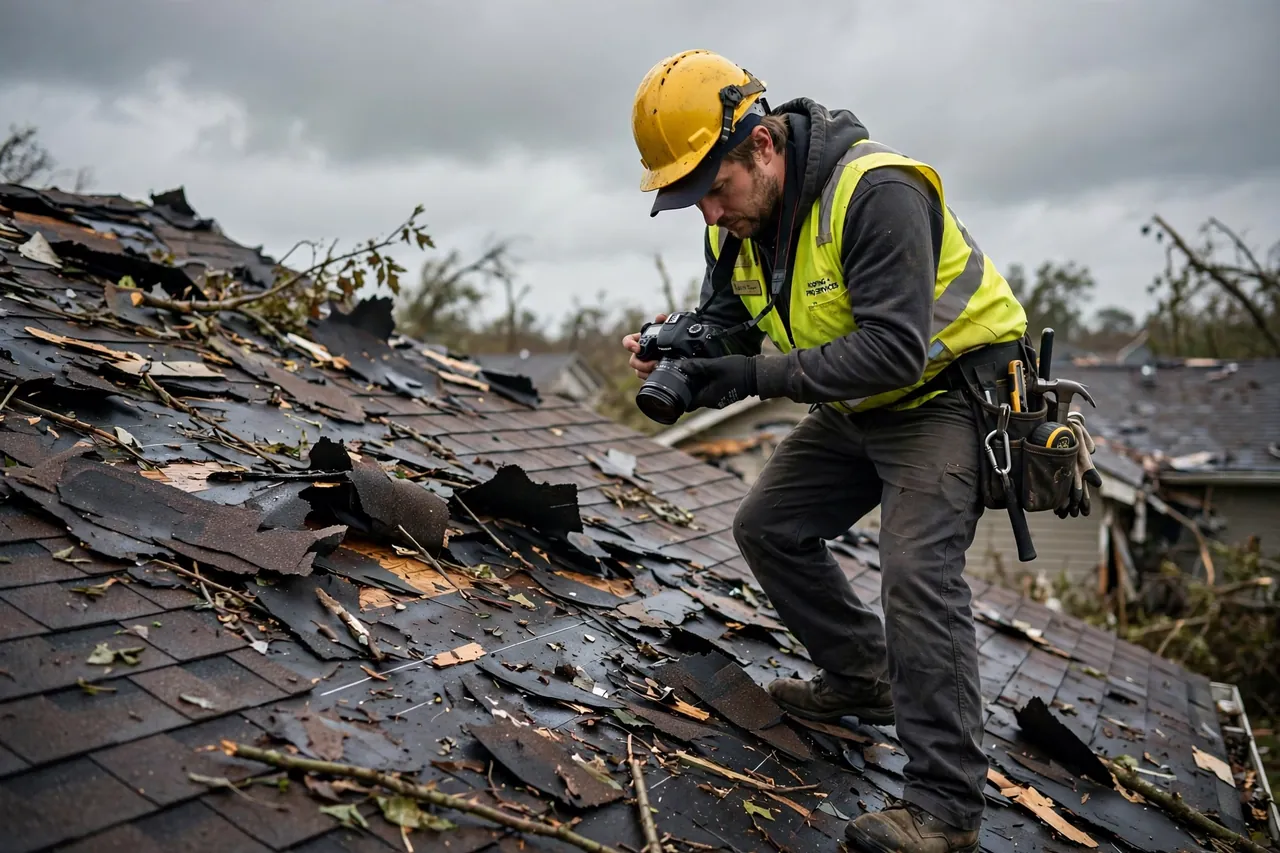
Storm Damage Roof Repair
Storm Damage Roof Repair in Wilmington DE
When a nor'easter, summer thunderstorm or hurricane remnant tears through Wilmington, your roof takes the hit first. We repair storm-damaged roofs across Wilmington, DE — from emergency tarping that stops the water tonight to permanent repairs that put the roof back the way it was.
Service overview
What does storm damage look like on a Wilmington roof?
Storm damage on a Wilmington roof usually shows up as missing, cracked or lifted shingles, dented metal panels, torn flashing, or punctures from fallen branches. After high winds, the damage is not always visible from the ground — lifted shingle tabs and creased shingles can look fine until the next rain finds its way in.
Wilmington sits in the path of nor'easters that grind up the Delaware coast each winter and fast-moving summer thunderstorms that drop hail and 60-plus mph gusts with almost no warning. Remnants of Atlantic hurricanes reach New Castle County every few years. Each type of storm damages roofs differently: sustained nor'easter winds lift shingle tabs and work flashing loose over hours, while a summer microburst can peel back entire sections in minutes.
The housing stock across Wilmington makes storm response a local specialty. Trolley Square's Victorians carry steep, complex roofs with slate and metal accents that shed wind differently than the broad, low-slope sections on Forty Acres brick colonials. Post-war capes and ranch homes in neighborhoods off Maryland Avenue often have older three-tab shingle roofs where the sealant strips have aged out — those are the first to lift in a gust front. Knowing what roof you have tells us where to look first.
A professional storm damage inspection covers the full roofing system, not just the obvious missing shingles. We check shingle sealant bonds, nail pull-through, flashing at chimneys and valleys, ridge vents, pipe boots, gutters and downspouts, and the attic underside for fresh water staining. Documenting everything with photos matters: it gives you a clear record of what the storm did, which is exactly what your insurance adjuster will want to see.
One thing Wilmington homeowners learn the hard way: storm damage gets worse fast when it sits. A few lifted shingles let wind-driven rain under the field of the roof, soaking the underlayment and decking. What starts as a half-day shingle repair becomes deck replacement and interior drywall work within a season. Calling right after the storm — even if you only suspect damage — is the cheapest decision you can make.
Practical benefits
Why fast storm damage repair matters
A storm-damaged roof is a race against the next rain. Here is what prompt professional repair protects.
Stops water intrusion tonight
Emergency tarping and temporary sealing keep wind-driven rain out of your attic and walls until permanent repairs are complete. Every dry day you buy prevents mold, soaked insulation and stained ceilings.
Preserves the rest of the roof
Storm damage is rarely limited to what you can see. Lifted shingles break their sealant bonds and never re-seal on their own; repairing the damaged section now keeps the surrounding roof intact instead of letting the failure spread.
Protects your insurance position
Documented, professionally repaired storm damage with dated photos and a written scope gives you a clean record. Adjusters look for prompt mitigation — tarping and quick repairs show you protected the property.
Restores wind resistance
A repaired roof is re-sealed to manufacturer nailing and fastening patterns, so the next nor'easter hits a complete system instead of a weakened one. Patch-and-pray fixes skip this and fail at the next storm.
How service works
Our storm damage repair process
From the first call to the final walkthrough, here is exactly how a storm damage job runs.
STEP 01
Damage assessment
We inspect the full roof — shingles, flashing, vents, gutters and the attic underside — and document every storm-related issue with photos. You get a clear picture of what the storm did before any work is discussed.
Tools and methods
Tools and methods for storm repairs
Reinforced tarps and battens
Heavy-duty tarps secured with wood battens — not just draped plastic — hold through follow-up weather until permanent repairs are done.
Shingle sealant and roofing cement
Used to re-bond lifted tabs and seal flashing transitions where wind worked the original sealant loose.
Pneumatic roofing nailer
Drives ring-shank nails to the correct depth and pattern so replacement shingles hold through the next storm.
Moisture meter
Finds trapped moisture in decking and insulation that looks dry on the surface, so hidden storm damage does not get sealed in.
Flashing brake
Bends custom step and counter flashing on site to match your roof's exact angles — critical where storms tore the original flashing away.
Fall protection and staging
Roof anchors, harnesses and proper staging keep the crew safe on steep or storm-slickened roofs, especially on Wilmington's older Victorians.
Where this service fits
When to call for storm damage repair
Right after high winds or hail.
If shingles are in your yard, gutters are dented, or neighbors are getting repairs, your roof likely took damage too. An inspection now catches lifted tabs and creased shingles before they leak.
When water stains appear days later.
Storm leaks often show up as ceiling stains a week after the weather clears. The entry point is usually uphill from the stain — we trace it back to the damaged flashing or shingle and repair the source.
Before the next storm in the forecast.
A compromised roof plus another nor'easter is how small damage becomes structural. If the forecast shows another system coming, emergency weatherproofing buys you protection immediately.
Local execution
Storm damage and Wilmington's neighborhoods
Wilmington's storms hit every neighborhood, but the damage looks different depending on the age and style of the roofs. Here is what we see across the city after major weather.
Trolley Square
Steep Victorian roofs with slate and metal accents handle wind well but lose individual pieces — a single missing slate or lifted metal panel becomes a direct water path. Repairs here are surgical: replace the piece, re-secure the surrounding courses.
Forty Acres
Brick colonials with broad shingle fields catch full wind loads. We commonly find creased shingles — bent but still attached — across entire slopes after nor'easters. Creased shingles have lost their wind rating and need replacement.
The Highlands
Mature tree cover near Rockford Park and Brandywine Creek means branch strikes: punctured shingles, dented gutters and torn ridge vents. We repair the puncture, check the decking underneath, and re-seal the area.
Riverfront
Newer construction near the Christina River faces unobstructed wind off the water. Ridge vents and hip caps take the brunt; we re-secure or replace them and verify the underlayment beneath is intact.
Baynard Village
Mixed-age housing stock means mixed damage: older three-tab roofs lose tabs outright while newer architectural shingles mostly suffer sealant failure. Each gets a different repair approach matched to the material.
Problems we solve
Storm problems we repair
These are the failure patterns Wilmington storms leave behind — and how each one gets fixed properly.
Lifted and creased shingles
Wind lifts shingle tabs and breaks the sealant bond; the shingle may lie flat again but it will never re-seal. Creased shingles are weakened along the bend line. We replace affected shingles with matching material and re-seal the surrounding courses so the slope sheds water as one system again.
Torn and displaced flashing
Step flashing at walls, counter flashing at chimneys and valley metal work loose under sustained wind and driving rain. We remove the compromised sections, inspect the underlayment beneath, and install new flashing bent to fit — because flashing that does not sit tight is flashing that leaks.
Hail bruising and punctures
Hail bruises asphalt shingles by knocking granules loose, exposing the mat to UV and shortening its life; larger hail and branch strikes puncture outright. We map every bruised and punctured area, replace what cannot be saved, and document the pattern across the slope.
A practical standard for every visit.
Clear planningPrepared arrivalsCareful workLocal follow-through
Experience in the details
How we approach storm damage work
Storm repair is part detective work, part craftsmanship. Our approach is built around finding all of the damage — not just the obvious part — and repairing it so the roof handles the next storm.
- Full-system inspection on every storm call: shingles, flashing, vents, gutters and attic underside.
- Photo documentation of all damage before, during and after the repair.
- Materials matched to your existing roof — shingle brand, color line and profile.
- Manufacturer nailing and fastening patterns on every replacement, so wind ratings hold.
- Emergency weatherproofing available when water is actively entering.
Common in this area
Common storm damage repair scenarios
These are the jobs we see again and again after Wilmington storms — the symptom homeowners notice, and how it is typically fixed.
Shingles scattered across the yard after a nor'easter
Symptom: Bare patches of underlayment visible from the street, sometimes with felt flapping in the wind. Typical fix: Emergency tarping the same day, then replacement shingles matched to the existing GAF, Owens Corning or CertainTeed roof, nailed and sealed to spec across the damaged slope.
Ceiling stain appearing a week after a thunderstorm
Symptom: A brown ring on a bedroom ceiling with no obvious roof damage visible from the ground. Typical fix: Attic inspection to trace the water path uphill to lifted flashing or a creased shingle, repair of the entry point, and replacement of any water-damaged underlayment found along the way.
Dented gutters and bruised shingles after hail
Symptom: Granules collecting in gutters and downspouts, small dark spots on shingles where the mat shows through. Typical fix: Slope-by-slope assessment of granule loss, replacement of bruised shingles that have lost their protective layer, and photo documentation of the damage pattern.
Where we work
One local team. A lot of ground covered.
Downtown WilmingtonHistoric DistrictTrolley SquareHighlandsBaynard VillageRiverfrontForty AcresBrandywine Village
Check my address Stay off the roof — storm-damaged roofs are slippery and structurally uncertain. From the ground, note missing shingles, fallen branches and interior leaks, take photos, and call a roofer. If water is coming in, place buckets, move valuables, and ask about emergency tarping to stop further intrusion until repairs are scheduled.
Yes, and this is common. Lifted shingle tabs often lie flat again after the wind drops, and hail bruising is hard to see without being on the roof. A professional inspection finds sealant-bond failures, creased shingles and loosened flashing that look fine from the driveway but will leak in the next rain.
We photograph every damaged area — close-ups and wide shots showing the pattern across the slope — along with attic staining and interior water marks. You receive the photos with the written repair scope, which gives you a dated, detailed record of what the storm did.
A properly installed tarp will not. We secure heavy-duty tarps with wood battens fastened at solid points, never by nailing through good shingles in the field of the roof. The tarp is a temporary shield; the permanent repair follows as soon as scheduling allows.
Wind damage lifts, creases or tears shingles off and works flashing loose — it is usually visible as missing or displaced material. Hail damage bruises shingles by knocking protective granules off, which may not leak immediately but shortens the roof's life. Both need professional assessment because the repair approach is different.
Repair it now. Waiting turns a contained shingle or flashing repair into soaked decking, mold in insulation and interior drywall damage. Storm damage never improves on its own, and the next storm will exploit the same weak point harder.
Yes. Nor'easters are Wilmington's most frequent major storm threat, and hurricane remnants reach Delaware regularly. We handle the full range: emergency weatherproofing during the event's aftermath, complete damage assessment, and permanent repairs to shingle, metal and flat roofing systems.
Keep exploring
Related Services
Your next step is waiting
Storm damage? Don't wait for the next rain.
Call The Roof Medics now. We will weatherproof the damage, document everything, and repair your Wilmington roof properly — so the next storm hits a roof that is ready.
Start with the basics
Contact Us for Roof Repair
Reach out to us for any roof repair needs. We are available Monday to Friday and respond quickly to inquiries.