Your local team · Brandywine Village
Roof Repair in Brandywine Village, Wilmington DE
Roof repair in Brandywine Village, Wilmington DE means working on history. This mill village on the Brandywine Creek — founded in the 1730s, home to Quaker millers, workers' cottages, and two landmark 1850s churches — holds some of the oldest houses in the state. The Roof Medics repairs slate, metal, and shingle roofs here with methods suited to 18th and 19th-century construction. Contact our team or call (302) 445-8567.
Local knowledge
Why Roof Repair in Brandywine Village Is Different
Brandywine Village was a town before it was a neighborhood. Swedish colonist Tyman Stidham opened the first mill on the Brandywine in 1687; by 1735, Quaker families — the Shipleys, Canbys, Leas, and Tatnalls — had founded the village across the creek from Wilmington, building flour mills on the water's power and stone homes along Market Street, the old toll road to Philadelphia. The Brandywine Academy went up in 1798. St. John's Episcopal Church and Brandywine Methodist Episcopal Church followed in 1857. The village's roofs have been weathering Delaware storms ever since — some for well over two centuries.
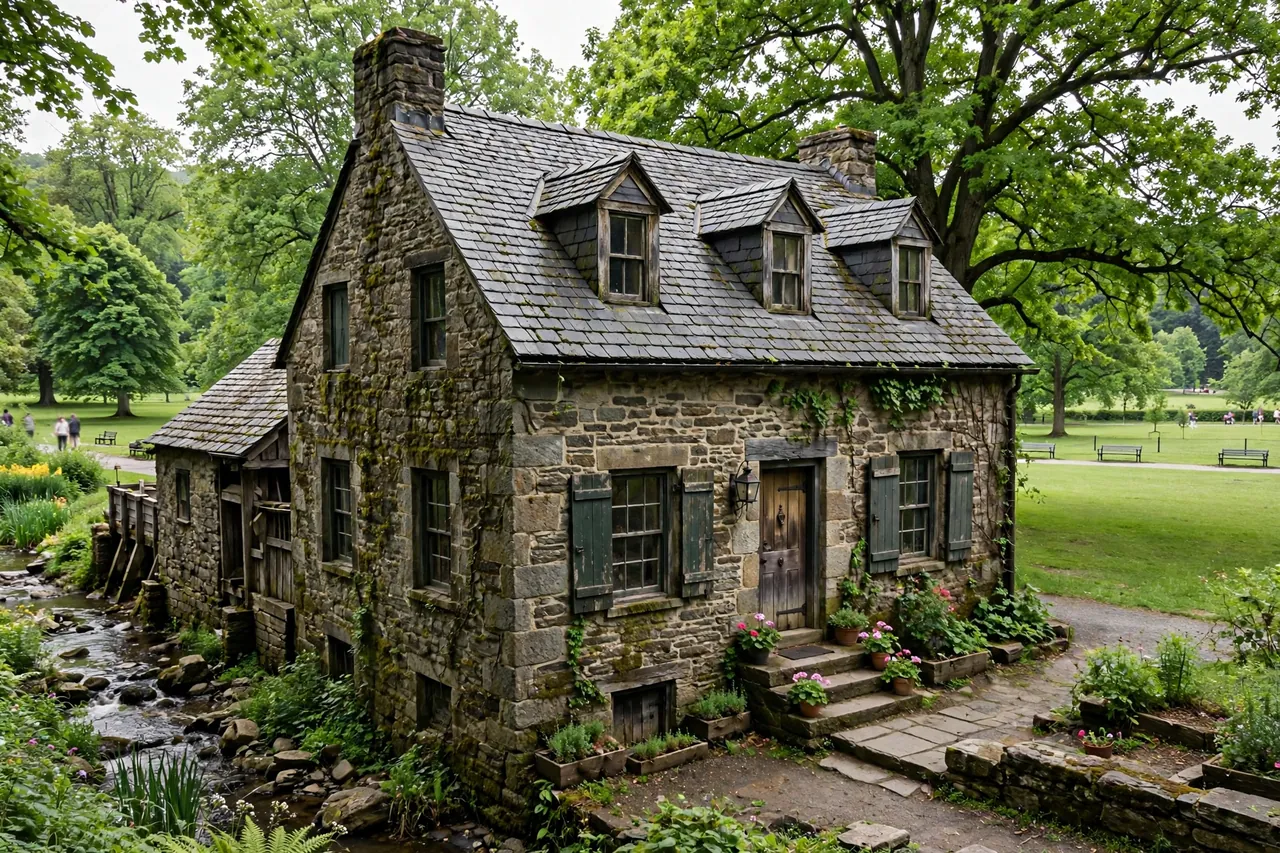
The defining material of Brandywine Village is stone — blue rock quarried along the Brandywine's banks, laid into the walls of mill-owner homes, workers' cottages, and churches alike. Stone construction shapes roofing in specific ways. The walls are thick and the roof structures they carry are heavy timber, often hand-hewn, spanning modest distances on the workers' cottages and grander spans on the millers' houses. Chimneys are stone or brick, tall and massive, and their flashing details — where roof meets tons of masonry — are the most failure-prone points on these buildings. Mortar erosion from two centuries of freeze-thaw is not a maybe; it is the baseline condition.
Roof forms here are old and simple: steep gables on the cottages, larger gabled and hipped roofs on the mill-owner homes, slate on the finest houses and churches. Many roofs have been re-covered multiple times — original wood shingles gave way to slate, slate to asphalt — and each generation left its details. When we open up a Brandywine Village roof, we often find the archaeology of those generations: old flashing buried under new, original decking boards beneath plywood, hand-forged nails beside modern ones. Repair work here means understanding which layer is doing the work and which has failed, then fixing the failure without disturbing the sound history around it.
The creek is the other great shaper of roofs in the village. The Brandywine runs fast and the valley holds humidity; morning fog is routine, and the air stays damp long after rain. That moisture works on every roofing material — it feeds moss on shaded slopes, accelerates the corrosion of old flashing, and keeps attic spaces humid where ventilation is poor. Low-lying properties near the creek also think about water differently: not flooding of the roof, obviously, but the constant damp that makes flashing maintenance — not the shingle field — the deciding factor in whether a roof stays dry.
Historic designation covers much of the village — the Brandywine Village Historic District has been on the National Register since 1971 — and that matters for roofing choices. Repairs should preserve the visible historic character: slate repaired with slate, metal details kept in compatible metals, shingle replacements chosen to suit the period of the building. This is not red tape; it is the reason the village still looks like the village. Our repair-first approach fits naturally here: fix what has failed, match what is there, and leave the historic fabric alone.
Access and scale round out the picture. These are dense, old streets — Market Street was a toll road, not a boulevard — with houses close together and little room for staging. The roofs themselves are steep, the chimneys tall, and the stonework unforgiving of careless equipment. We plan Brandywine Village jobs accordingly: careful access, protection for the old stone and neighboring properties, and meticulous cleanup. Old slate and hand-forged nails in a garden bed are nobody's idea of a finished job.
Common local problems
Common Roof Types and Problems in Brandywine Village
Three centuries of roofing survive side by side in Brandywine Village. Here's what we repair.
Historic slate roofs
The signature roofing of the village's finest homes and both 1857 churches. Two-hundred-year-old slate fails the way all slate fails — individual tiles slip, crack, or delaminate — but the scale here is historic: hand-cut slates, old-growth roof structures, and flashing details from the era of craft. We replace broken slates with matching stone and rebuild the metal flashings, which are invariably the true source of slate-roof leaks.
Asphalt shingles on workers' cottages
The modest mill-workers' cottages mostly wear architectural or three-tab asphalt shingles now, from GAF, Owens Corning, or CertainTeed. Simple steep gables, highly repairable: our shingle repair replaces damaged courses, renews pipe boots and flashings, and addresses the moss that the creek valley's damp air encourages.
Stone chimney flashing and mortar
The most common leak source in the village, full stop. Massive stone and brick chimneys with two centuries of mortar erosion and flashing generations layered over each other. We strip back to sound material, repoint failing mortar, and install proper step and counter flashing — the methodical fix that ends chimney leaks for good.
Standing-seam metal roofing
Metal appears on village outbuildings, rear additions, and some main roofs — practical, long-lived, and appropriate to the area's working history. Fasteners back out and seams open over the decades; we reseat with compatible metals, reseal seams, and patch isolated corrosion.
Church and institutional roofs
St. John's Episcopal and Brandywine Methodist Episcopal — Gothic Revival and mid-19th-century landmarks — carry steep, complex roofs at a scale beyond any house. Steeples, large valleys, and long slopes demand the same careful techniques scaled up, with staging planned around active congregations.
Low-slope additions and outbuildings
Rear additions, sheds, and converted outbuildings with low-slope roofs in mod-bit or EPDM. They pond water and fail at seams and wall transitions. We patch membranes and rebuild those transitions to keep the damp creek air outside where it belongs.
Common in this area
Common Roof Repair Scenarios in Brandywine Village
Recurring patterns from the village's old streets — described generally, not as anyone's story.
Chimney leak on a stone mill-era home
Symptom: A stain spreads on the ceiling below a massive stone chimney each spring. The mortar joints have eroded over decades and layers of old flashing have separated from the masonry. Typical fix: Stripping back to sound masonry, repointing the eroded joints, and installing new step and counter flashing properly integrated with the surrounding roof — a repair built to last as long as the stone.
Slipped slates on a historic gable
Symptom: Several slates have slipped on a steep front gable, and daylight is visible from the attic at one spot. The surrounding slate looks sound. Typical fix: Replacing the slipped and broken slates with matching stone secured with copper bibs, renewing the underlayment at the daylight spot, and inspecting the valley flashing below — leaving the sound historic roof intact.
Moss and worn shingles on a creek-side cottage
Symptom: The shaded slope of a workers' cottage is moss-covered and the shingles beneath are thinning, with granules filling the gutter. The sunny slope looks fine. Typical fix: Treating and removing the moss, replacing the worn courses on the shaded slope with matched shingles, and improving the drainage and ventilation conditions that let the damp take hold.
We know the route
Landmarks Near Brandywine Village
Brandywine Village's landmarks are the reason the village exists — mills, churches, and the creek that powered them.
Brandywine Village Historic District
On the National Register since 1971, encompassing the mill-era homes, granite mill-owner houses, and historic sites along the creek. The district's 18th and 19th-century rooflines are among the oldest we service anywhere in Delaware.
St. John's Episcopal Church
The 1857–1858 Gothic Revival church designed by noted Philadelphia architect John Notman. Its steep slate roof and stonework show the village's finest historic roofing craft.
Brandywine Academy (1798)
Built by the village's Quaker founders, with its cupola added in 1820 — the building rang for Lafayette's visit in 1824. One of the oldest structures in the area, roofed in the traditions we still repair.
Brandywine Park
Adjacent to the village, the park follows the creek whose water power built everything here. The valley's humidity and weather shape every roof in the village to this day.
Plan for the season
How Seasons Affect Roof Repair in Brandywine Village
The creek valley gives Brandywine Village its own seasons — damper, foggier, and harder on old roofs.
Spring
Nor'easters drive rain up the Brandywine valley and test every old flashing detail in the village. Spring is when winter's freeze-thaw damage to mortar and slate fasteners reveals itself — the right moment for an inspection of these old roofs.
Summer
Valley humidity peaks; moss and algae grow fastest on the shaded, creek-side slopes. Thunderstorms snap branches onto roofs, and heat bakes the asphalt shingles on the workers' cottages. Ventilation checks matter — old houses often have too little.
Fall
Leaves fill the valleys and gutters of even the simplest cottage roofs, holding damp against the roofing for weeks. A thorough fall clearing — valleys, gutters, low-slope sections — is essential maintenance before freeze-thaw begins.
Winter
Freeze-thaw is the great enemy of old masonry and old flashing. Mortar joints open, slate fasteners work loose, and ice dams form where attic heat escapes — backing water under courses on roofs that have seen two centuries of winters.
Services available in Brandywine Village
Our Roof Repair Services in Brandywine Village
All of our roof repair services cover Brandywine Village — from workers' cottages to landmark churches. Learn about our team.
01
Emergency Roof Repair
Storm damage on a 200-year-old roof needs a careful hand, fast. Our emergency response stabilizes Brandywine Village roofs — slipped slate, wind damage, active leaks — then repairs them properly.
View service 02Roof Leak Repair
Chimney leaks, valley leaks, flashing failures on stone and slate — we trace every village leak to its true source in the old construction and fix it there.
View service 03Shingle Roof Repair
For the cottages and houses now roofed in architectural shingles: matched replacement courses, renewed flashings, and honest assessment of the roof's remaining life.
View service 04Flat Roof Repair
Additions and outbuildings with low slopes get EPDM or mod-bit membrane repairs, resealed seams, and rebuilt wall transitions.
View service 05Commercial Roof Repair
Converted mills and mixed-use buildings along Market Street get scaled repair for larger, more complex historic roof systems.
View serviceOften, yes — especially slate and well-built timber structures, which were made to last and to be maintained piecemeal. Individual slates, flashings, and mortar joints are all repairable. What matters is an assessment by someone who understands historic construction, not just modern roofing.
Repair is the most designation-friendly work you can do — it preserves the existing historic fabric. We match original materials and keep details consistent with the building's period, which is exactly what preservation standards favor.
Two centuries of freeze-thaw erode mortar joints, and generations of flashing — each installed over the last — eventually separate from the masonry. Water entering at the chimney travels inside before it shows. Proper repointing plus new step and counter flashing is the lasting fix.
It accelerates the things dampness always accelerates: moss and algae growth, corrosion of old flashing, and rot where ventilation is poor. Good flashing maintenance, debris clearing, and attic ventilation counteract most of it — which is why those three are our constant recommendations in the village.
We source matching natural slate — salvaged or new — in the same size, thickness, and color range, and install it with traditional methods like copper bibs. The goal is a repair that's invisible in the historic roof.
Not for repairability. Most village cottages were re-roofed in asphalt generations ago, and those roofs repair the same way as any quality shingle roof — matched courses, renewed flashings, sound structure underneath. We work with what's there.
Yearly — spring, after freeze-thaw season — plus after major nor'easters. On roofs this old, the inspection is the most valuable service there is: catching a slipped slate or open mortar joint early keeps history intact and repairs small.
Your next step is waiting
Old Roofs Need Old-School Care.
Brandywine Village has trusted its roofs to craftsmen for three centuries. Call The Roof Medics for an assessment from people who understand historic construction — and who'll tell you straight what your roof needs.
Start with the basics
Contact Us for Roof Repair
Reach out to us for any roof repair needs. We are available Monday to Friday and respond quickly to inquiries.