Your local team · Baynard Village
Roof Repair in Baynard Village, Wilmington DE
Roof repair in Baynard Village, Wilmington DE covers one of the city's most architecturally varied neighborhoods — from the Baynard Boulevard Historic District's early-1900s showplaces to the hardworking colonial rowhouses east of Concord Avenue. The Roof Medics repairs asphalt shingle, metal, and flat roofs across the whole neighborhood, matching the fix to the house. Contact our team or call (302) 445-8567.
Local knowledge
Why Roof Repair in Baynard Village Is Different
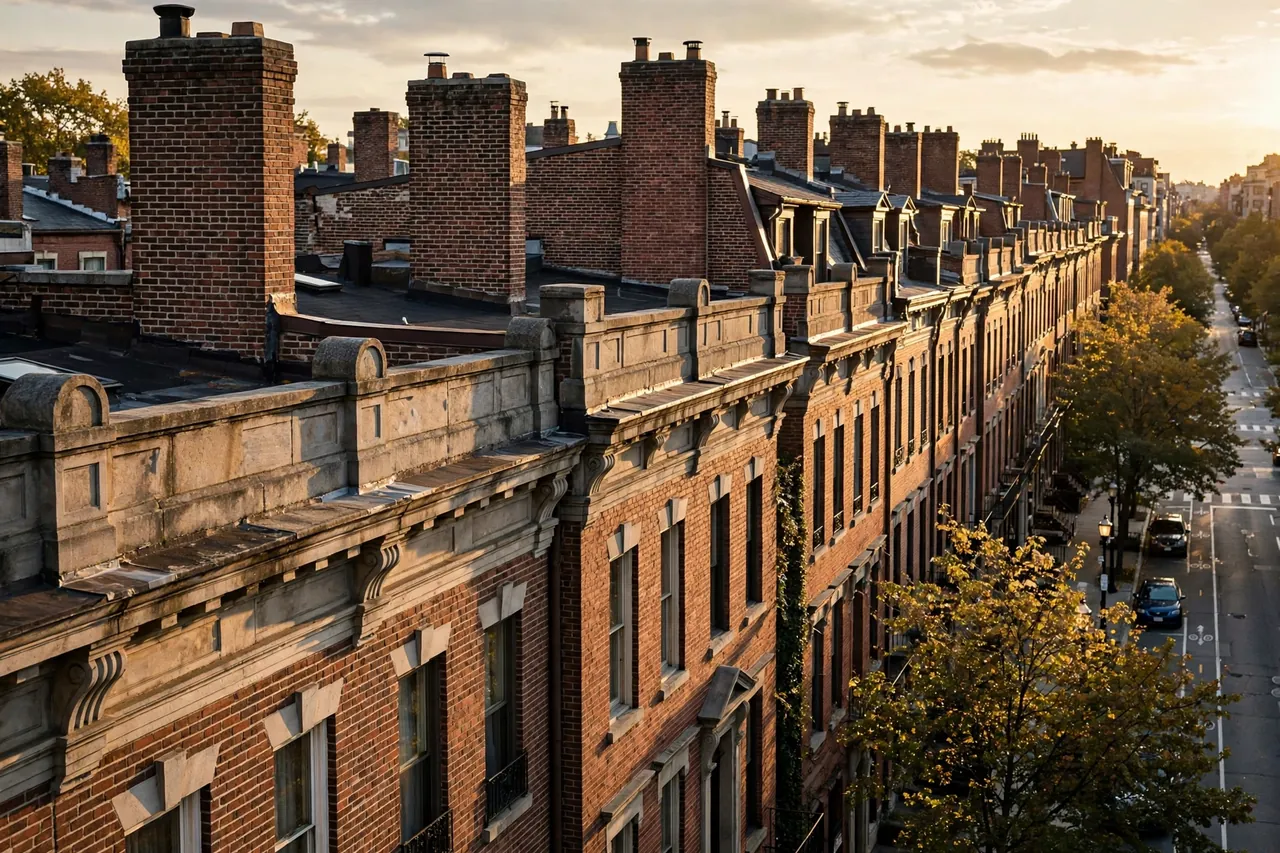
Baynard Village sits on Wilmington's north side, laid out as a streetcar suburb more than a century ago on a traditional urban grid. The centerpiece is the Baynard Boulevard Historic District — 77 contributing buildings in Queen Anne, Colonial Revival, and Tudor Revival styles, developed between 1895 and 1930 after the boulevard was laid out in 1893. A few blocks east, past Concord Avenue, the housing turns more modest: colonial-style townhouses and rowhouses built for working families. That variety is exactly what makes roofing here interesting.
Two housing types, two roofing realities. Along Baynard Boulevard itself, the homes are substantial — large detached and semi-detached houses with complex rooflines, multiple gables, dormers, and tall brick chimneys, many still carrying details from their original construction. Their roofs fail the way old complex roofs fail: at the flashing. Valleys, chimney intersections, and dormer cheeks account for the great majority of leaks we trace in the historic district, while the shingle fields themselves often have years of life left. The repair approach here is preservation-minded: keep the original roof where it is sound, renew what has failed, and match materials to the period of the house.
East of Concord Avenue and along the side streets, the picture changes. Modest colonial townhouses and brick rowhouses wear simpler front-gable or side-gable roofs, overwhelmingly in architectural asphalt shingles. These roofs are straightforward and highly repairable — but they share party walls, which means a leak at a shared wall flashing or a deteriorated cricket between rooflines can involve two properties. Rowhouse roofing also means working in tighter quarters: narrow rear alleys, limited staging room, and neighbors close enough that debris control and communication matter as much as the repair itself.
Age spread is the third factor. Because Baynard Village built out over four decades and then kept building, roof ages on a single block can span from five years to fifty. That matters for repair decisions: a 12-year-old architectural shingle roof with wind damage is an obvious repair candidate, while a 30-year-old three-tab roof with widespread granule loss and brittle shingles may be telling you — honestly — that repairs are buying diminishing returns. We give that assessment straight. Our business is repair, but we will tell you when a roof has aged past the point where patching makes sense, and recommend a professional assessment for replacement in that case.
The neighborhood's position shapes its weather exposure. Baynard Village sits just north of the Brandywine Creek valley, close enough that storms rolling up the valley arrive with force, and Route 202 bisects the neighborhood carrying traffic — and wind-driven debris. Mature street trees, particularly along the boulevard, drop branches the same way they do across north Wilmington. And the urban grid means houses sit close together, so wind funnels between buildings and finds the vulnerable edges: ridges, rakes, and the flashing along party walls.
What ties it together is that Baynard Village rewards a roofer who reads the house. A Queen Anne on the boulevard and a colonial rowhouse two blocks east need completely different approaches — different materials, different flashing details, different access plans. We scope every job to the specific building: its age, its roof type, its exposure, and its neighbors. That is how repairs last in a neighborhood this varied.
Common local problems
Common Roof Types and Problems in Baynard Village
From boulevard showplaces to working rowhouses, here are the roofing systems we repair most in Baynard Village.
Architectural asphalt shingles
The dominant roofing across Baynard Village, from GAF, Owens Corning, and CertainTeed. On the historic-district homes they cover complex multi-gable roofs where valleys and flashing do the hard work; on rowhouses they cover simple gables where wind uplift at the ridge is the main enemy. Our shingle repair replaces damaged courses, rebuilds valleys, and renews the flashings — the highest-value work on roofs with sound structure underneath.
Original and replacement slate
A number of Baynard Boulevard's grandest homes still carry slate, either original or installed as a premium replacement. Slate fails tile by tile — slipped, cracked, or delaminated slates — while the flashing at valleys and chimneys wears out decades earlier. We replace individual slates with matching stone and rebuild flashings, preserving the roof's century-long character.
Rowhouse party-wall flashing
Where rowhouses share walls, the flashing along the party wall — often a raised parapet or a simple wall intersection — is a chronic leak point. Sealant ages, metal corrodes, and water finds the seam. Repair means installing new through-wall or surface-mounted flashing with proper counter flashing, sealed to both roof surfaces.
Flat and low-slope rear sections
Many Baynard Village houses have rear additions, dormers, or porch roofs with low slopes, roofed in modified bitumen or EPDM. These sections pond water and fail at the seams and at the wall flashing where they meet the main house. We patch membranes and rebuild those transitions so the addition stays dry.
Brick chimney flashing and mortar
Tall brick chimneys are everywhere in the neighborhood, and their step flashing and mortar joints are among the most common leak sources we find. Freeze-thaw opens mortar joints; corroded step flashing lets water behind the courses. We repoint and reflash methodically — the fix that actually ends chimney leaks.
Gutters and downspouts on the grid
The urban grid's mature trees fill gutters every fall, and overflowing gutters rot fascia and soak the roof edge. We clear, resecure, and repair the gutter-adjacent roofing — drip edge, fascia, and the first shingle courses — so water leaves the roof the way it should.
Common in this area
Common Roof Repair Scenarios in Baynard Village
Recurring patterns from Baynard Village streets — described as patterns, not anyone's story.
Valley leak on a Baynard Boulevard Queen Anne
Symptom: Water stains spread across a second-floor ceiling after heavy rain. The roof's shingle field looks fine, but the valley where two steep gables meet has deteriorated — the metal lining is corroded and debris has been holding moisture there for years. Typical fix: Rebuilding the valley with new metal lining woven into the surrounding courses, replacing the water-damaged underlayment beneath, and clearing the debris traps upstream. The rest of the sound roof stays untouched.
Party-wall leak between rowhouses
Symptom: A damp patch appears on the top-floor wall shared with the neighboring house. The flashing along the party wall has aged out and wind-driven rain is entering at the seam. Typical fix: Installing new flashing along the party wall with proper counter flashing sealed to both roof surfaces — coordinated so the repair protects both homes.
Chimney leak on a 1920s colonial
Symptom: Each spring brings a new stain below the brick chimney. Mortar joints at the base have eroded and the step flashing has separated from the masonry. Typical fix: Repointing the failing mortar joints, installing new step and counter flashing, and sealing the chimney crown — ending the seasonal leak cycle.
We know the route
Landmarks Near Baynard Village
Baynard Village's landmarks cluster around its historic boulevard and the great park at its doorstep.
Baynard Boulevard Historic District
The boulevard itself — laid out in 1893, listed on the National Register in 1979 — with its 77 contributing Queen Anne, Colonial Revival, and Tudor Revival homes. The district's complex historic rooflines are our most demanding and most rewarding work in the neighborhood.
Brandywine Park
At the neighborhood's doorstep, with the Brandywine Zoo, the Jasper Crane Rose Garden, and the historic Josephine Fountain. The park's tree canopy and the creek valley shape the weather that Baynard Village roofs endure.
McCabe United Methodist Church
One of the historic district's landmark churches, whose own period roofing shows the same steep-pitch and flashing details as the grand homes around it.
Hanover Presbyterian Church
Another district anchor — its steeple and slate details are visible across the boulevard and mark the heart of the historic streetscape.
Plan for the season
How Seasons Affect Roof Repair in Baynard Village
North-side weather, filtered through a streetcar suburb's trees and valleys.
Spring
Nor'easters arrive up the Brandywine valley with wind-driven rain that tests every valley and party-wall flashing in the neighborhood. Spring inspections catch winter's freeze-thaw damage — open mortar joints, slipped slates, lifted shingles — before the summer storm season.
Summer
Heat bakes south-facing slopes and dries out sealants and pipe boots. Thunderstorms bring the year's strongest gusts, which attack ridge caps and the wind-exposed edges of rowhouse roofs. Shade from the boulevard's mature trees keeps some slopes damp — watch for moss.
Fall
Leaves from the neighborhood's mature canopy pack valleys, gutters, and low-slope sections. Wet debris held against roofing for weeks accelerates wear. A thorough fall clearing is the highest-value maintenance a Baynard Village homeowner can schedule.
Winter
Freeze-thaw cycles pry at mortar joints, flashing seams, and slate fasteners. Ice dams form where attic heat escapes at the eaves, backing water under the courses — the classic winter leak on older colonials and rowhouses.
Services available in Baynard Village
Our Roof Repair Services in Baynard Village
Every one of our roof repair services is available across Baynard Village — from boulevard landmarks to side-street rowhouses. Learn about our team.
01
Emergency Roof Repair
Storm damage doesn't respect historic districts. Our emergency response covers wind-torn shingles, impact damage, and active leaks anywhere in Baynard Village — stabilized quickly, repaired properly.
View service 02Roof Leak Repair
Valley leaks, chimney leaks, party-wall leaks — Baynard Village leaks start at the intersections. We trace water to its true source and repair it there.
View service 03Shingle Roof Repair
From boulevard mansions to colonial rowhouses, we replace damaged shingle courses, rebuild valleys, and renew flashings with matched materials.
View service 04Flat Roof Repair
Rear additions, dormers, and porch roofs with low slopes get EPDM, TPO, or mod-bit membrane repairs and rebuilt wall transitions.
View service 05Commercial Roof Repair
Apartment buildings and mixed-use properties along the neighborhood's corridors get scaled-up repair for larger low-slope systems.
View serviceYes — repair is usually the most district-friendly option, since it preserves the existing roof's appearance. We match original materials and keep profiles and details consistent with the house, so the repair blends into the historic streetscape.
The flashing along the party wall ages, corrodes, or separates, letting wind-driven rain into the seam. The fix is new flashing with proper counter flashing sealed to both roof surfaces — a straightforward repair once correctly diagnosed.
Look for ceiling stains near the chimney, gaps between the flashing and the brick, crumbling mortar joints, and rust streaks on the masonry. In a freeze-thaw climate like Delaware's, chimney flashing and mortar deserve a yearly look.
It depends on the roof's overall condition, not just its age. If the shingles are still pliable and the damage is localized, repair is usually the smart move. If granule loss is widespread and shingles are brittle across whole slopes, an honest assessment may point toward replacement — and we'll tell you which situation you're in.
Because valleys fail first. The metal lining corrodes, debris holds moisture against it for years, and wind-driven rain exploits any weakness. Rebuilding the valley with new lining — while leaving the sound shingle field alone — is one of the highest-value repairs in roofing.
Yes. Baynard Village's variety is exactly what we handle — from complex multi-gable historic homes on the boulevard to straightforward colonial rowhouses. Each gets scoped to its own building, materials, and exposure.
Yearly is a sound rhythm — spring, after freeze-thaw season — plus after any major nor'easter or windstorm. On older and more complex roofs, catching a failed flashing early is the difference between a small repair and interior damage.
Your next step is waiting
Historic Home or Rowhouse — We'll Read Your Roof Right.
Baynard Village roofs come in every variety Wilmington built. Call The Roof Medics for an honest, house-specific assessment — we'll show you exactly what needs repair and what doesn't.
Start with the basics
Contact Us for Roof Repair
Reach out to us for any roof repair needs. We are available Monday to Friday and respond quickly to inquiries.