Your local team · Riverfront
Roof Repair in Riverfront, Wilmington DE
Roof repair on Wilmington's Riverfront, DE looks different from anywhere else in the city. The townhomes and condominiums of Justison Landing and Christina Landing, the commercial buildings along the Christina River, and the converted industrial structures all face the same river wind and humidity — but their roofs are decades newer than the Victorians up the hill. The Roof Medics repairs shingle, metal, and flat roofing across the Riverfront district. Contact our team or call (302) 445-8567.
Local knowledge
Why Roof Repair in Riverfront Is Different
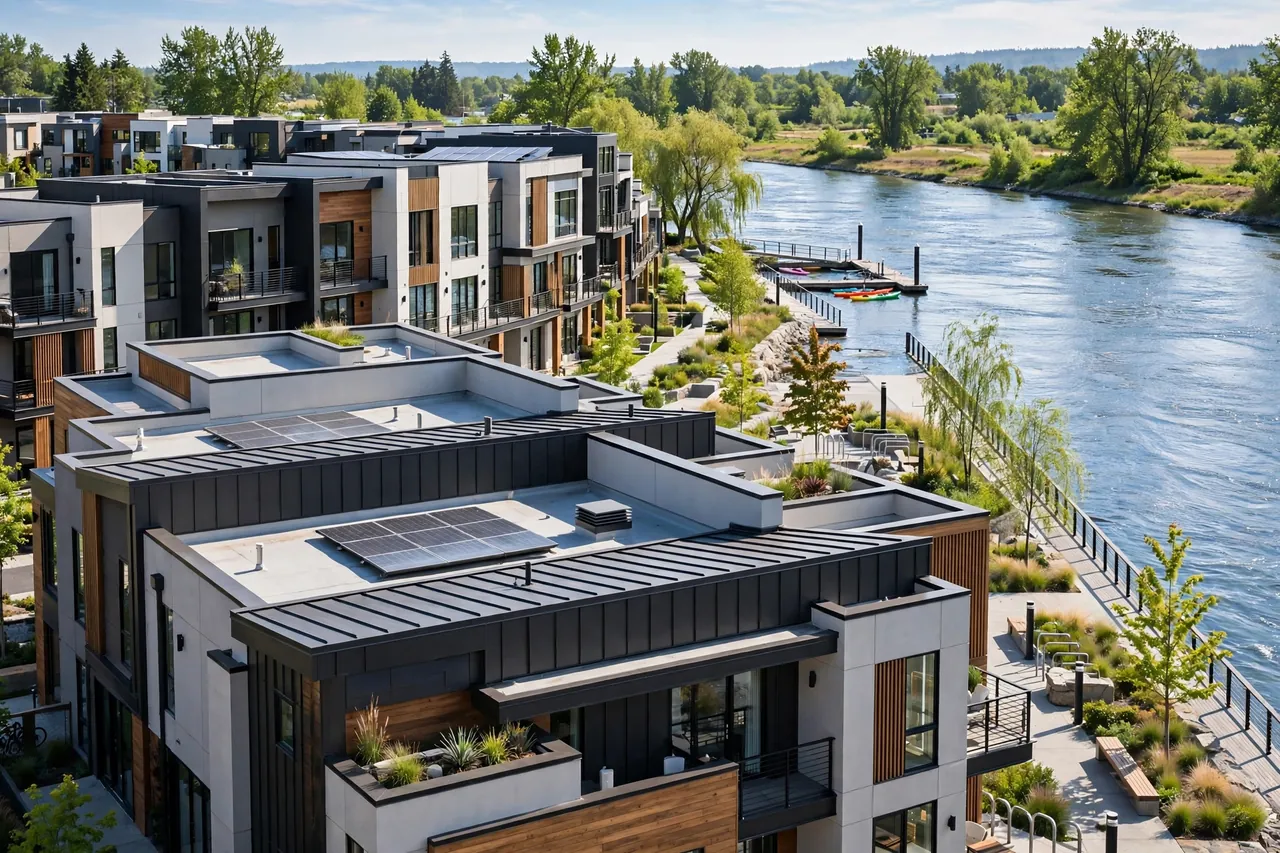
Before 1996, the Wilmington Riverfront was tanneries, shipyards, and industry along the Christina River. The Riverfront Development Corporation's redevelopment since then built an entirely new neighborhood: townhouses, lofts, and apartments at Justison Landing and Christina Landing, the Chase Center, Frawley Stadium, the Delaware Children's Museum, and the 1.8-mile Riverwalk. That newness defines the roofing here — most Riverfront roofs are 10 to 25 years old, not 100.
Newer roofs fail differently. Instead of century-old slate and corroded flashing, Riverfront repair work centers on the failure modes of modern construction: flashing details that were rushed during the building boom, sealant-dependent transitions that have dried out after 15 Delaware summers, pipe boots and vents on complex townhome rooflines, and wind damage on the district's most exposed slopes. The materials are good — architectural shingles from GAF, Owens Corning, or CertainTeed, modern EPDM and TPO on the commercial buildings — but no roof is maintenance-free, and the river environment is demanding.
Wind exposure is the Riverfront's signature roofing challenge. The district sits wide open along the Christina River, with long fetches for wind coming up the river valley. Townhome ridges and the windward slopes of every building take the full force of nor'easters and summer thunderstorms, with no hills or mature canopy to break it. We see the results after every major storm: lifted and creased shingles along ridges, damaged ridge caps, and flashing pulled at roof-to-wall intersections on the exposed elevations. Townhome rows are particularly vulnerable at their end units, which catch wind from two directions.
Humidity and the river microclimate add a slower form of wear. The Christina River keeps nearby air moist, and morning fog is common. That persistent dampness encourages algae streaking on north-facing shingle slopes — the dark streaks visible on many Riverfront townhomes — and keeps shaded sections damp long after rain. It also means attic ventilation matters enormously here: moist air trapped under the roof deck accelerates the aging of the decking and the underside of the roofing. When we repair a Riverfront roof, we check ventilation as a matter of course.
The district's commercial buildings bring large low-slope roofs into the picture — EPDM, TPO, and modified bitumen systems spanning thousands of square feet, with rooftop HVAC units, vents, and drains that all penetrate the membrane. These roofs fail at the penetrations and the seams, and they pond water where drainage was value-engineered. Commercial flat roof repair here means heat-welded membrane patches, resealed penetrations, and restored drainage — the unglamorous work that keeps a big roof watertight.
Townhome ownership adds a coordination dimension. Many Riverfront residences are part of HOAs with shared roofing responsibility, which means a leak in one unit can originate two doors down, and repairs sometimes need association approval. We're used to working within those structures: documenting the problem clearly, scoping the repair precisely, and communicating with both the homeowner and the HOA so the fix happens without friction. The repair itself is the same careful work — matched shingles, proper flashing, clean details — whatever the ownership structure.
Common local problems
Common Roof Types and Problems in Riverfront
The Riverfront's roofs are younger than the city's average, but the river environment keeps our crews busy. Here's what we repair most.
Townhome architectural shingles
The signature Riverfront residential roof. Complex multi-gable townhome rooflines with valleys, dormers, and sidewall intersections — all executed during the building boom, some better than others. We repair wind-lifted courses, rebuild rushed valleys, and renew the pipe boots and flashings that dry out after 15 years. Matching current manufacturer lines from GAF, Owens Corning, or CertainTeed keeps repairs invisible.
Ridge caps and windward slopes
The most wind-exposed roofs in Wilmington. Ridge caps take the first hit in every nor'easter, and the windward slopes lose tabs and sealant integrity faster than sheltered roofs. Our shingle repair here focuses on re-securing ridges, replacing creased and missing shingles, and reinforcing the courses storms keep finding.
Algae-streaked shaded slopes
River humidity plus shade equals the dark algae streaks common on north-facing Riverfront slopes. Beyond cosmetics, algae holds moisture against the shingles and accelerates granule loss. We treat and clean affected slopes, replace the most worn courses, and check that attic ventilation is doing its job.
Commercial low-slope membranes
EPDM, TPO, and mod-bit on the district's offices, retail, and converted industrial buildings. Failures concentrate at rooftop unit curbs, vent penetrations, seams, and ponding areas. We weld and adhere membrane patches, reseal every penetration, and restore drainage paths — extending big roofs by years.
Metal roofing accents
Standing-seam metal appears on Riverfront commercial buildings and as accents on newer townhomes. River air is harder on fasteners and sealants than inland air; we reseat fasteners with compatible metals, reseal seams, and patch isolated corrosion before it spreads.
Converted industrial roofs
A few Riverfront structures carry their industrial past in their roofs — large spans, unusual details, layers of past repairs. These need a roofer who reads what's actually there: we strip back to sound material, repair the structure's real failure points, and leave the building's character intact.
Common in this area
Common Roof Repair Scenarios in Riverfront
The patterns behind our Riverfront calls — described generally, not as anyone's story.
Ridge damage after a nor'easter
Symptom: A windstorm out of the northeast peels ridge caps and creases shingles along the windward ridge of a townhome row. End units show the worst of it. Typical fix: Replacing the damaged ridge caps and creased courses with matching shingles, re-sealing the surrounding courses, and inspecting the full windward slope for loosened tabs the storm left behind.
Mystery leak traced two doors down
Symptom: Water stains appear in a middle townhome unit, but its own roof looks sound. The leak originates at a failed sidewall flashing two units over, traveling along the shared structure. Typical fix: Repairing the failed flashing at its true source, with documentation for the HOA showing exactly where the water entered and what was fixed — so the right repair happens the first time.
Ponding on a commercial low-slope roof
Symptom: Standing water persists for days after rain on a Riverfront commercial roof, and the membrane is blistering around a rooftop HVAC curb. Typical fix: Heat-welding membrane patches at the blistered areas, resealing the unit curb flashing, and restoring the drainage path so water leaves the roof instead of sitting on it.
We know the route
Landmarks Near Riverfront
The Riverfront's landmarks are the district itself — built from industry into a neighborhood in a single generation.
The Riverwalk
The 1.8-mile Christina Riverwalk is the district's spine. The townhomes and condos lining it — our core Riverfront service area — face the river's full wind exposure.
Justison Landing
The large residential complex of townhouses, lofts, and apartments on the western shore. Its varied rooflines — from townhome gables to flat commercial sections — keep our crews familiar with every modern roofing type.
Frawley Stadium
Home of the Judy Johnson Field, the stadium anchors the district's west end. The commercial buildings around it carry the large low-slope roofs we service.
Chase Center on the Riverfront
The convention center and its neighbors represent the district's commercial core — big roofs, rooftop equipment, and the membrane repair work that goes with them.
Plan for the season
How Seasons Affect Roof Repair in Riverfront
River weather has its own calendar. Here's how the year treats Riverfront roofs.
Spring
Nor'easters run straight up the Christina River valley and hit the Riverfront first and hardest. Spring is peak season for ridge damage, lifted shingles, and wind-driven rain finding weak flashing. Post-storm inspections after every major nor'easter are the norm here.
Summer
Humidity peaks and afternoon thunderstorms deliver the year's most violent — if brief — wind gusts. Algae growth accelerates on shaded slopes. This is also when commercial roofs show their ponding problems, as summer downpours overwhelm marginal drainage.
Fall
Less tree debris than the hill neighborhoods, but the river valley funnels early cold snaps. Fall is the ideal window for pre-winter repairs: re-securing ridges, renewing dried sealants, and clearing commercial drains before freeze-thaw.
Winter
Open exposure means winter wind finds every loose shingle, and freeze-thaw cycles work sealant-dependent flashing details. Ice dams are less common on the well-ventilated newer roofs, but they still form where insulation or ventilation falls short.
Services available in Riverfront
Our Roof Repair Services in Riverfront
All of our roof repair services cover the Riverfront district — residential, HOA, and commercial. Learn about our team.
01
Emergency Roof Repair
When a nor'easter peels your ridge or a storm opens up a slope, our emergency response covers the whole Riverfront — rapid stabilization, then a proper lasting repair.
View service 02Roof Leak Repair
Townhome leaks that travel between units, commercial leaks at rooftop penetrations — we trace water to its true entry point and fix it there.
View service 03Shingle Roof Repair
Wind-damaged courses, algae-worn slopes, dried-out flashings on townhome roofs — matched shingles, rebuilt details, clean results.
View service 04Flat Roof Repair
The district's commercial specialty: EPDM, TPO, and mod-bit membrane repairs, resealed penetrations, restored drainage on big low-slope roofs.
View service 05Commercial Roof Repair
Offices, retail, and converted industrial buildings along the Christina — scaled repair for large systems with rooftop equipment.
View serviceExposure. The Riverfront sits open along the Christina River with no hills or mature canopy to break the wind, so nor'easters and thunderstorms hit these roofs at full force — especially ridges and end units. Properly secured ridges and well-sealed courses handle it; weakened ones don't.
Yes. We document the problem precisely — including when a leak originates in a neighboring unit — so you have a clear scope to take to your HOA. Many associations approve our repairs directly once they see exactly what needs fixing.
Algae, thriving on river humidity and shade. It's common on the Riverfront and mostly cosmetic at first, but it holds moisture against the shingles and accelerates wear. Treatment and cleaning handle it; badly worn courses underneath should be replaced.
At the penetrations — HVAC curbs, vents, drains — and at seams, plus ponding where drainage is marginal. The membrane field itself is usually sound. Targeted repairs at those points extend a commercial roof's life significantly.
Because 15 Delaware years — nor'easters, humid summers, freeze-thaw winters — age the vulnerable details first: sealants dry out, pipe boots crack, flashing sealant fails, and wind loosens courses. The shingle field is usually fine; the details need attention. That's normal, and it's repairable.
Yes. The Riverfront's industrial-heritage buildings have unique roofs — large spans, layered past repairs, unusual details. We assess what's actually there and repair the real failure points without disturbing the building's character.
Quickly. Wind-lifted shingles and damaged ridges let the next rain straight into the roof system, and the Riverfront gets plenty of next rains. Temporary stabilization followed by proper repair is the right sequence — and the sooner the better.
Your next step is waiting
River Weather Is Tough. Your Roof Doesn't Have to Suffer.
From townhome ridges to commercial membranes, The Roof Medics knows Riverfront roofs. Call for an honest assessment — we'll show you exactly what the river wind did and what it takes to fix it.
Start with the basics
Contact Us for Roof Repair
Reach out to us for any roof repair needs. We are available Monday to Friday and respond quickly to inquiries.