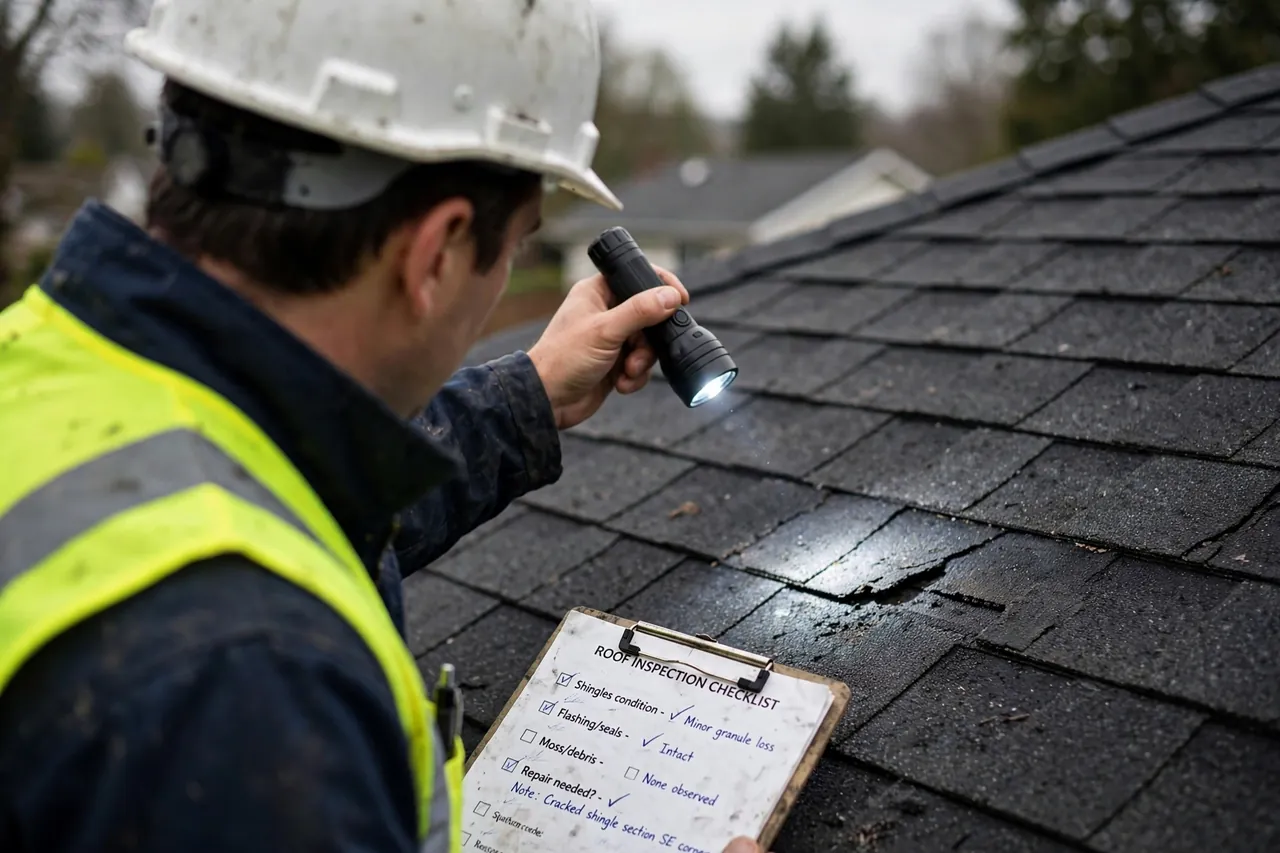
Roof Inspection
Roof Inspection in Wilmington DE
Most roof problems are invisible from the ground — and by the time they show up as a ceiling stain, the damage is months old. Our professional roof inspection gives Wilmington, DE homeowners a complete, honest picture of their roof's condition: what is sound, what needs attention now, and what to watch.
Service overview
What does a professional roof inspection cover?
A professional roof inspection covers the entire roofing system: shingles or panels, flashing at every penetration and transition, gutters and downspouts, attic ventilation and the underside of the decking. You receive dated photos of every finding and a written report that prioritizes what needs repair now versus what to monitor.
A proper inspection is a system check, not a glance from a ladder. We walk the full roof surface, testing shingle sealant bonds by hand, checking every fastener line on metal sections, probing flashing at chimneys, skylights, valleys and walls, and examining pipe boots, ridge vents and drip edges. Then we go inside: the attic tells the other half of the story through water staining, daylight at penetrations, compressed insulation and ventilation balance.
Wilmington homes reward this thoroughness. A Trolley Square Victorian might have slate, metal and asphalt shingle all on one roof, each aging differently. A Forty Acres colonial could have three layers of history under its current shingles. Without a full-system look, the standard outcome is a surprise leak two years later from the detail nobody checked.
What you receive is documentation, not a sales pitch. Every finding is photographed — close-ups of the issue and wide shots showing where it sits on the roof — and written up in plain language with a priority: repair now, plan for later, or monitor. That report becomes your roof's baseline record, useful whether you are budgeting for maintenance, negotiating a home purchase, or filing an insurance claim after the next storm.
An inspection is also the moment to separate real problems from cosmetic aging. Granule loss on a 20-year-old shingle roof, light surface rust on a metal panel, hairline mortar cracks on a chimney — some of these matter and some do not. Part of our job is telling you which is which, so you spend money only where it protects the roof.
Practical benefits
Why get your roof inspected
An inspection is the lowest-cost way to control the highest-cost part of your home's exterior. Here is what it buys you.
Catches problems while they are small
A lifted flashing tab or a cracked pipe boot is a minor repair today and a rotted deck section next year. Inspections find the small failures in their cheap phase.
Creates a dated condition record
Photos and a written report establish what your roof looked like on a specific date — the single most useful document you can have when the next nor'easter hits and questions arise.
Informs smart budgeting
Knowing you have three to five years left on your shingles, or that the chimney flashing needs attention this season, turns roof spending from emergency to plan.
Supports buying and selling
Buyers want to know the roof's condition; sellers who can show a recent inspection report negotiate from strength. Either way, documented facts beat guesswork.
How service works
How our inspection works
A thorough, unhurried look at the whole system — here is the sequence.
STEP 01
Exterior ground survey
We start from the ground and the ladder: roofline straightness, gutter condition, visible shingle or panel issues, chimney condition, and how water flows off the roof. This frames what the close-up inspection needs to verify.
Tools and methods
What we use during an inspection
Moisture meter
Detects trapped moisture in decking and insulation that looks and feels dry — the hidden damage that matters most.
Binoculars and camera
For safely assessing steep or fragile sections — slate, old metal — that should not be walked, without missing detail.
Probe and hand tools
Gentle probing of sealant bonds, flashing edges and soft spots reveals failures that eyes alone miss.
Drone photography (where useful)
For complex or very steep roofs, aerial photos capture the full picture of slopes and valleys in context.
Attic light and mirror
To examine the underside of decking around penetrations and in tight rafter bays where leaks like to hide.
Standardized checklist
The same full-system sequence on every roof, so nothing — from pipe boots to drip edge — gets skipped.
Where this service fits
When to schedule a roof inspection
Once a year, ideally in fall.
A fall inspection catches summer storm damage and prepares the roof for nor'easter season — Wilmington's hardest months for roofing. Annual rhythm means nothing goes more than twelve months unchecked.
After any major storm.
Hail, hurricane remnants, or a nor'easter with sustained high winds all warrant a post-storm look, even if nothing is visibly wrong. Much storm damage is invisible from the ground.
When buying or selling a home.
For buyers, it is due diligence on the most expensive exterior system. For sellers, a clean inspection report answers the buyer's questions before they are asked.
Local execution
Inspection notes for Wilmington homes
Every Wilmington neighborhood has a characteristic roof story. Here is what our inspections typically focus on across the city.
Trolley Square
Multi-material roofs — slate, metal accents and asphalt together — need each material assessed on its own terms. We also check the ornate flashing details Victorians are famous for, where old solder joints eventually give way.
The Highlands
Tree cover is the theme: we look for branch abrasion, moss and algae holding moisture against shingles, and gutters packed with debris that back water up under the drip edge.
Forty Acres
Mid-century shingle roofs, many approaching the age where sealant bonds and flashing start failing together. Inspections here focus on the convergence points — valleys, chimneys, wall transitions.
Historic District
Appearance matters, so documentation is extra detailed: every finding photographed with context, so any future repair can be planned to preserve the streetscape character.
Riverfront
Newer roofs get a different inspection: verifying installation details — nailing patterns, flashing integration, ventilation balance — while everything is still young enough to correct easily.
Problems we solve
What inspections most often uncover
The same handful of issues shows up on Wilmington roofs again and again. An inspection finds them before they find your ceiling.
Failed pipe boots and vent flashing
Rubber pipe boots crack after years of UV exposure, opening a direct water path around every plumbing vent. It is one of the most common leak sources we find — and one of the simplest to repair once identified.
Deteriorated chimney flashing
Step and counter flashing work loose as mortar joints age, especially on Wilmington's older brick chimneys. Inspections catch the early gap — before water starts traveling down the chimney chase into the house.
Poor attic ventilation
Blocked soffits, missing ridge vents or powered fans fighting passive vents trap heat and moisture. The inspection connects attic conditions to roof symptoms — curled shingles, winter ice dams, mold — so the fix addresses the cause.
A practical standard for every visit.
Clear planningPrepared arrivalsCareful workLocal follow-through
Experience in the details
How we approach inspections
An inspection is only as good as its honesty. Our approach: look at everything, document everything, and tell you the truth — including when the truth is that your roof is fine.
- Full-system sequence on every roof — no skipped components, no rushed walkthroughs.
- Dated photo documentation of every finding, close-up and in context.
- Plain-language written report with clear priorities: now, later, or monitor.
- We distinguish cosmetic aging from real failure so you never pay for unnecessary work.
- If the roof is sound, we say so — an inspection that finds nothing wrong is a successful inspection.
Common in this area
Common inspection scenarios
Typical situations that bring Wilmington homeowners to schedule an inspection — and what the inspection usually reveals.
Buying a 1920s colonial in the Highlands
Symptom: The buyer wants to know what they are getting into before closing on an older home. Typical fix: A full-system inspection grading each roof plane, flashing detail and the attic — distinguishing original character worth preserving from deferred maintenance needing attention, all documented for negotiations.
Mysterious musty smell in an upstairs bedroom
Symptom: No visible stain, just a persistent odor after rain, in a home with no known roof history. Typical fix: Attic-first inspection tracing moisture to a slow seep at a valley or vent flashing — the kind of leak that never drips visibly but saturates insulation over months.
Five years since the last look at the roof
Symptom: A homeowner who has never had the roof professionally examined and wants a baseline. Typical fix: Complete baseline inspection with photo record: current condition of every component, prioritized repair list, and a realistic outlook on remaining service life to plan around.
Where we work
One local team. A lot of ground covered.
Downtown WilmingtonHistoric DistrictTrolley SquareHighlandsBaynard VillageRiverfrontForty AcresBrandywine Village
Check my address Once a year is the right rhythm for most Wilmington homes, ideally in the fall before nor'easter season. Add a post-storm inspection after hail, hurricane remnants or any nor'easter with sustained high winds. Annual inspections mean no problem goes more than twelve months undetected.
Dated photos of every finding — close-ups and wide context shots — with each issue explained in plain language and prioritized as repair now, plan ahead, or monitor. The report covers shingles or panels, all flashing details, gutters, attic ventilation and the underside of the decking.
Yes, when walking would damage the roof — old slate, fragile tile accents or very steep pitches. We use binoculars, cameras and drone photography for those sections, and we always tell you which areas were assessed remotely versus walked.
It gives you a realistic outlook, not a guarantee. Based on material condition, installation quality, ventilation and Wilmington's climate exposure, we tell you whether you are looking at years of service with maintenance, or a roof approaching the point where replacement planning should begin — and we show you the evidence behind the assessment.
It helps but is not required for the exterior portion. We do need attic access for the interior check, so someone should be available to let us in. We walk through the findings and report with you afterward either way.
An inspection is a diagnostic: a complete assessment of condition with documented findings and priorities, independent of any repair decision. An estimate prices specific work. The inspection comes first because it tells you what actually needs doing — the estimate then prices exactly that.
Often, yes. Moisture meters detect damp decking and insulation before any interior sign appears, and attic staining frequently predates ceiling stains by months. Finding the slow seep early is one of the highest-value outcomes an inspection delivers.
Keep exploring
Related Services
Your next step is waiting
Know what your roof is really doing.
Call The Roof Medics for a professional roof inspection. Full-system assessment, photo documentation and an honest written report — so you can plan with facts, not guesses.
Start with the basics
Contact Us for Roof Repair
Reach out to us for any roof repair needs. We are available Monday to Friday and respond quickly to inquiries.