Ice Dams on Delaware Roofs: Prevention and Repair
Ice dams do not leak through your roof — they back water up under it. Here is how they form and how to stop them.
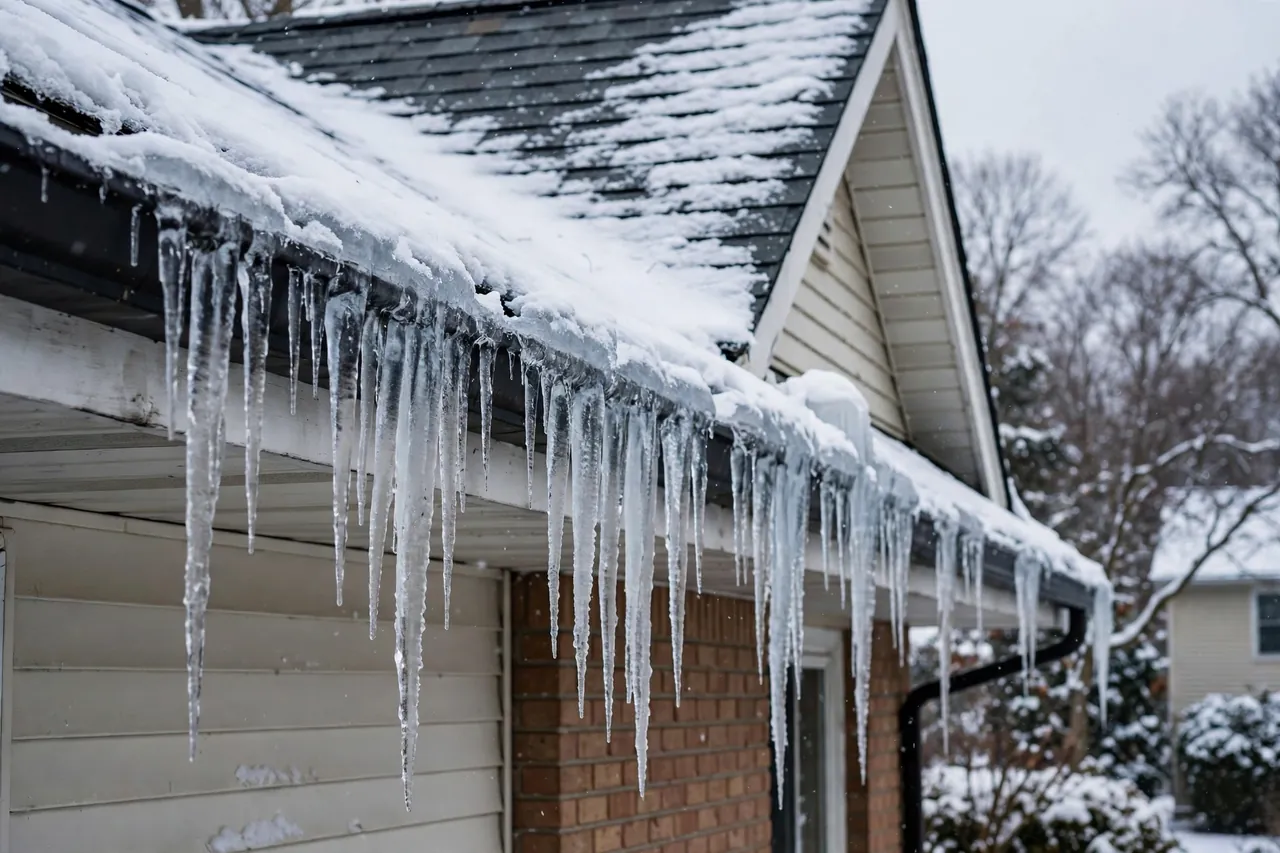
An ice dam is a ridge of ice that builds up along a roof’s eaves and traps melting snow behind it — and the trapped water, with nowhere to go, backs up under the shingles and into the house. If you have ever seen water staining on a ceiling or wall in February with no rain in sight, an ice dam is a prime suspect. They are a classic Delaware winter problem, and Wilmington’s older housing stock is especially prone to them.
The good news: ice dams are largely preventable, and the prevention addresses the root cause rather than the symptom. The bad news: the most common DIY responses — chipping at the ice, dumping salt on the roof — tend to damage the roof without fixing anything. Here is how ice dams actually form on Delaware roofs, what prevention really works, and how the resulting damage gets repaired.
How do ice dams form?
It starts in the attic, not on the roof. Heat escaping from your living space warms the underside of the roof deck, melting the bottom layer of snow even when the air outside is well below freezing. That meltwater runs down the slope until it reaches the eaves — the overhang beyond the heated house — where the roof surface is cold again. There it refreezes into a ridge of ice.
Each daily cycle adds to it: more snow melts from above, more water reaches the cold edge, more ice builds up. Eventually the ridge grows tall enough to pond water behind it. Shingles are designed to shed water flowing downward; they are not designed to hold back standing water pushing upward. The pooled water wicks under the shingle courses, through the underlayment, and into the decking — then into your attic, insulation, and ceilings.
Delaware’s winters are tailor-made for this cycle. We rarely get the deep, sustained cold that keeps snow frozen solid for months; instead we get freeze-thaw oscillation — snow, partial melt, refreeze — repeatedly through January and February. Every cycle is another deposit on the dam.
Why are Wilmington homes especially vulnerable?
Three features of Wilmington’s housing stock stack the odds. First, age: many homes in Trolley Square, the Highlands, Forty Acres, and the Historic District were built long before modern insulation and ventilation standards. Their attics often have thin, settled insulation and little or no airflow — the exact conditions that let heat pour into the roof deck.
Second, rooflines: Victorian-era homes and colonials with dormers, valleys, and complex intersections create natural collection points where snow drifts and meltwater converges. A simple gable roof sheds meltwater evenly; a roof with four dormers and two valleys concentrates it exactly where dams like to form.
Third, past modifications: recessed lights, bathroom fans vented into the attic instead of outside, and unsealed attic hatches all pump warm, moist air directly against the roof deck. In our experience these bypasses matter as much as insulation depth — a well-insulated attic with a leaky hatch can still grow a dam.
What damage do ice dams cause?
The headline damage is interior water intrusion: stained ceilings and walls, soaked insulation, warped trim, and in bad cases, collapsed drywall. Because the water enters with no storm attached, homeowners often discover it as a spreading stain weeks after the dam formed — by which point insulation may be saturated and mold has a head start.
On the roof itself, the backed-up water attacks the most vulnerable layers. It saturates underlayment, swells and rots decking at the eaves, and deteriorates the bottom courses of shingles. Repeated seasons of damming can rot fascia and soffits and tear gutters loose as ice expands — the heavy icicles along the eaves are the visible symptom, but the structural damage hides behind them.
There is also a compounding effect: once water has wicked under shingles and refrozen there, the freeze-thaw expansion pries shingle courses apart, making the next dam’s intrusion easier. Ice dam damage, left unaddressed, tends to get worse every winter rather than staying constant.
How can I prevent ice dams?
Real prevention keeps the roof deck cold — close to the outdoor temperature — so snow does not melt from underneath in the first place. That means three things working together in the attic.
First, insulation: the attic floor needs enough insulation to keep living-space heat out of the roof assembly. In older Wilmington homes this is the single highest-impact fix, because so many started life with far less than current standards. Second, ventilation: soffit vents feeding air in low and ridge vents exhausting it high create a continuous wash of cold air under the deck. One without the other underperforms — insulation without ventilation still traps heat; ventilation without insulation just moves the problem.
Third, air sealing: close the bypasses that let warm air stream directly into the attic — the hatch or pull-down stairs, recessed can lights, plumbing and chimney chases, bath fan ducts. Sealing these is unglamorous, inexpensive work that punches far above its weight. Together, the three keep the deck uniformly cold, and a uniformly cold deck does not grow dams.
A note on heat cables: the zigzag wires you see on some eaves melt channels through ice, and they can help in stubborn spots — but they treat the symptom at the roof edge while the cause (heat loss) continues above. Consider them a supplement for problem areas, not a substitute for insulation, ventilation, and air sealing.
What should I NOT do about an ice dam?
The do-not list is as important as the do list, because panicked mid-winter responses cause real harm. Do not chip at the dam with an axe, shovel, or ice pick — you will crack shingles and gouge the membrane long before you meaningfully reduce the ice. Do not throw rock salt or ice-melt pucks onto the roof; the runoff corrodes gutters and flashing, kills landscaping below, and does little against a thick dam.
Do not aim a pressure washer or steamer at it unless you know exactly what you are doing — blasting water upward under shingle courses is precisely the intrusion mechanism you are trying to stop. Roof rakes have a place for reducing snow load, but use them gently from the ground and never scrape down to the shingle surface; the granules you remove are the roof’s UV protection.
If water is actively coming in, the correct emergency response is inside the house: contain the water, protect finishes, and call a roofer. On the roof, the only safe mid-crisis measure is creating a drainage channel through the dam — work best left to professionals with steam equipment designed for the task, who can do it without destroying the shingles underneath.
How is ice dam damage repaired?
Repair follows diagnosis, and diagnosis starts with mapping how far the water traveled. Interior first: stained drywall gets cut out, wet insulation gets removed (it does not dry usefully in place), and the framing gets dried and checked for mold. Skipping the interior remediation guarantees the problem resurfaces as a mold issue months later.
On the roof, the damaged eave courses get stripped back to sound material: compromised shingles removed, underlayment inspected and replaced where saturated, decking cut out and replaced where rotted. This is also the moment to upgrade the assembly against the next dam — installing self-adhering ice-and-water shield membrane along the eaves and in valleys, lapped correctly so any future backup meets a waterproof barrier instead of bare decking. On many Wilmington repairs we extend that membrane well past the code minimum, because our freeze-thaw cycling punishes the minimum.
Then comes the prevention work described above, because repairing dam damage without addressing the heat loss that caused it is just scheduling next winter’s repair. The complete job — interior remediation, roof repair with upgraded underlayment, plus attic insulation, ventilation, and air sealing — is what actually ends the cycle. If you are dealing with active winter roof leaks, that full sequence is the conversation to have.
Are some roof types more resistant to ice dams?
Metal roofs shed snow faster than shingles, which can reduce dam formation — but "can" is doing heavy work in that sentence. A metal roof over a heat-leaking attic still melts snow from underneath, and the meltwater still refreezes at the cold eaves. We have seen ice dams on standing-seam metal in Wilmington when the attic bypasses were bad enough. The roof covering changes the odds; it does not change the physics.
Flat and low-slope roofs play a different game: without a pitched eave, they do not grow classic dams, but they collect snow load and drifting that finds every weak seam and drain. Their winter vulnerability is ponding and freeze-thaw at drains, not eave dams. The takeaway is the same across roof types: no covering makes a roof dam-proof on its own. Attic heat control is the prevention that works regardless of what is on top — and when winter water does get in, emergency repair stops it before the next freeze compounds it.
When should I call a roofer about winter roof issues?
Call when water is coming in, full stop — active intrusion does not wait for spring. Call also when you see the warning pattern repeating: dams forming in the same eave sections every winter, icicles thickening year over year, or new ceiling stains each February. Those are not quirks of an old house; they are a heat-loss problem announcing itself on schedule.
The best call, though, is the preventive one in fall: an attic and eave assessment before the first freeze. Insulation top-ups, ventilation corrections, and air sealing are all fair-weather jobs — cheaper, faster, and more effective when done before the snow flies. Winter work is emergency work; fall work is planning. The roofs that sail through Delaware winters are the ones somebody looked at in October.
Frequently Asked Questions
What is an ice dam? A ridge of ice that builds up along a roof’s eaves when heat escaping into the attic melts snow from underneath; the meltwater refreezes at the cold overhang. Trapped water behind the dam backs up under the shingles and leaks into the house.
Why do ice dams happen more on older homes? Older homes typically have thinner attic insulation, limited ventilation, and more air leaks — recessed lights, unsealed hatches, bath fans vented into the attic — all of which warm the roof deck unevenly and drive the melt-freeze cycle.
Can ice dams damage my roof permanently? Yes. Repeated damming rots decking and fascia at the eaves, destroys underlayment, tears gutters loose, and the freeze-thaw prying loosens shingle courses — damage that compounds every winter it goes unaddressed.
Should I knock icicles off my gutters? Icicles themselves are mostly a symptom, but very large ones signal active damming worth investigating. Do not yank them — you can tear gutters or shingles. Their presence is a cue to check the attic and eaves, not a DIY demolition project.
Do heat cables prevent ice dams? They can help in stubborn spots by melting drainage channels, but they treat the symptom at the eaves while heat loss continues above. Lasting prevention comes from attic insulation, ventilation, and air sealing.
Is it safe to chip ice off my roof? No. Axes, shovels, and ice picks crack shingles and gouge underlayment long before they clear meaningful ice. If a dam needs mechanical removal, it calls for professional steam equipment, not hand tools.
Will my homeowner’s insurance cover ice dam damage? Coverage depends on your policy and whether the damage was sudden versus the result of long-term neglect — insurers distinguish the two. Document the damage promptly and review your policy’s terms; we cannot advise on coverage outcomes.
How do I know if I have an ice dam or just icicles? Icicles alone are mostly a symptom of melting snow — dramatic-looking but not automatically a problem. An ice dam is a thick ridge of ice built up along the eave itself, often with water visibly ponding behind it or stains appearing on ceilings below. If you see the ridge plus interior signs, you have a dam worth addressing.
Ice dams are a heat-loss problem wearing a winter coat — and once you see them that way, both prevention and repair become straightforward. If this winter has left stains on your ceilings or you want the attic assessed before the next freeze, call The Roof Medics at (302) 445-8567.