Roof Repair vs Replacement: How to Tell in Wilmington
Most roof problems are repairable. Some are not. Here is how to tell the difference — honestly, without the sales pitch.
The honest answer to "repair or replace" is: it depends on how widespread the failure is. A roof with a few damaged shingles, one bad flashing detail, or a single active leak is almost always a repair job. A roof with failures across multiple slopes, soft decking in several areas, or shingles at the end of their service life may be past the point where repairs make sense — and a straight-talking roofer will tell you so.
We are a repair-only company, so we have no replacement to sell you — which also means we have no reason to steer you either way. What follows is the same framework we use when assessing a Wilmington roof: the signs that point to repair, the signs that point to a replacement conversation, and the gray area in between where judgment and a proper inspection matter most.
When is roof repair clearly the right call?
Repair wins whenever the problem is localized and the surrounding roof is healthy. The classic cases: a handful of wind-damaged shingles after a nor’easter, a cracked pipe boot letting in a slow drip, step flashing that has pulled away from a chimney, a single valley with worn shingles, or an isolated leak traced to one failed detail.
The key test is what the rest of the roof looks like. If the shingles around the problem still have good granule coverage, lie flat, and seal properly — and the decking underneath is solid — then fixing the failed component restores the system. There is no reason to replace a roof because one of its parts wore out early. Pipe boots, for example, routinely fail a decade before the shingles around them; replacing the boots is maintenance, not a roof crisis.
Age matters less than condition here. We regularly see twenty-year-old roofs in the Highlands and Forty Acres with isolated, very repairable issues and plenty of sound field shingles. A targeted shingle repair in those cases is the right-sized answer.
What are the signs a roofer may recommend replacement?
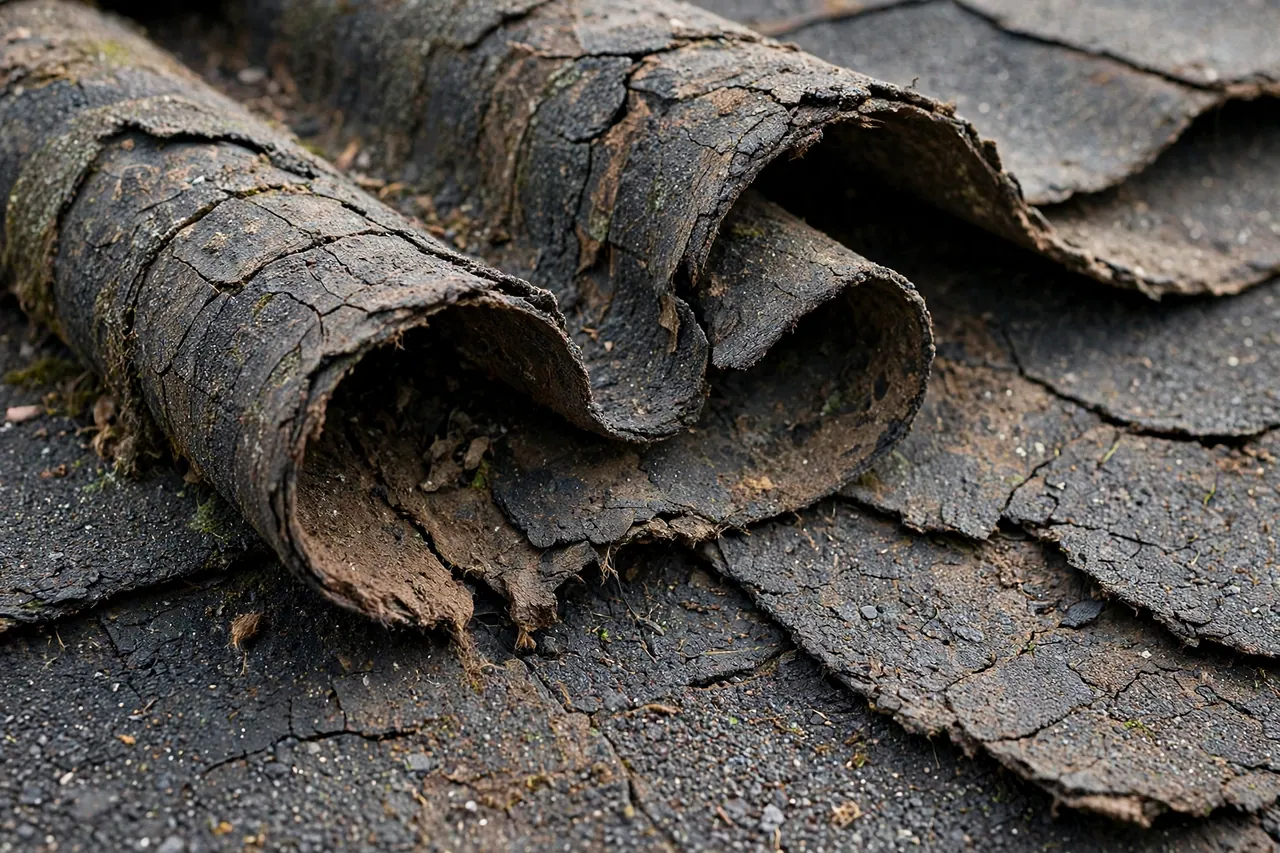
The conversation shifts when failures are systemic rather than local. Watch for these patterns: leaks appearing in multiple, unrelated areas — that suggests the waterproofing layer is failing broadly, not at one detail. Widespread granule loss with bald spots across several slopes. Shingles curling, clawing, or cracking across large areas, which indicates the asphalt has aged out. Soft or spongy decking in more than one section, found by walking the roof or from attic inspection.
Another telling sign is repair history. If the same roof has needed leak repairs three years running, each in a different spot, you are not fixing a problem — you are chasing the leading edge of systemic failure. At some point the cumulative spend and disruption of serial repairs exceeds the value they deliver.
When we see this pattern, we say so plainly: the roof is a candidate for replacement, and the homeowner should get a replacement assessment from a full-service roofing company. We do not sell replacements, so that recommendation costs us the job — which is exactly why you can trust it when we make it.
How does roof age factor into the decision?
Age is context, not a verdict. A standard architectural shingle roof in Delaware typically serves around two decades, sometimes more with good ventilation and maintenance; three-tab shingles generally less. But "typical" hides enormous variation. A well-ventilated roof on a shaded street near Brandywine Park can outlast a heat-baked, poorly ventilated roof of the same age by years.
Use age the way a doctor uses it: as background for interpreting symptoms. Granule loss at year eight means something different than granule loss at year twenty-two. At eight, it may signal a ventilation or manufacturing issue worth investigating and repairing. At twenty-two, it is the roof telling you its service life is ending. Either way, the symptoms get an honest read — age just calibrates what "honest" means.
What about storm damage — repair or replace?
Storm damage gets its own framework because the cause is sudden, not gradual. After hail or a major wind event, the question is scope: how much of the roof’s surface was actually damaged? A few creased or missing shingles on the windward slope is a repair. Widespread hail bruising across every slope — the kind where granules are knocked off in impact patterns throughout — may exceed what spot repairs can sensibly address.
This is also where documentation matters. Photograph everything before any work begins, note the storm date, and get a professional assessment that maps the damage slope by slope. That assessment serves two purposes: it tells you whether repair is viable, and it gives you the record you need if an insurance claim enters the picture. Our storm damage assessments are built exactly for this — mapping what happened, not selling what is next.
Can repairs extend the life of an older roof?
Yes — often by years, when the roof’s core is still sound. Think of it as strategic maintenance: replacing aging pipe boots before they leak, re-sealing exposed flashing, swapping out the dozen most weathered shingles on the south slope, keeping valleys clear. None of these are replacements; together, they can carry a roof through several more seasons of Delaware weather.
The limit is the law of diminishing returns. Maintenance makes sense while each repair addresses a discrete, fixable issue. It stops making sense when you are essentially rebuilding the roof one leak at a time. A good roofer will tell you which side of that line you are on — and a repair-only roofer has a particular incentive to be honest about it, since "keep repairing" is the answer that keeps them employed. When we tell an owner their money is better saved toward replacement, that advice runs against our own interest.
What questions should I ask any roofer about repair vs replacement?
Whoever assesses your roof — us or anyone else — these questions cut through noise. First: "Can you show me?" Ask to see photos of the actual failures, and where they are. Second: "Is the problem localized or widespread?" The answer should map to specific slopes and details, not vibes. Third: "What happens if I repair now and revisit in two years?" An honest roofer can describe the likely trajectory.
Fourth, and most important: "If this were your house, what would you do?" It is a cliché because it works — it forces the roofer off the script and into judgment. And finally, get a second opinion on any big call. The repair-vs-replacement decision is the highest-stakes call in residential roofing; it deserves more than one set of eyes.
What does a proper repair-vs-replace assessment involve?
A real assessment is methodical, not theatrical. It starts in the attic: tracing any staining to its source, checking decking for softness or mold, and noting ventilation. Then the roof walk: every slope examined for shingle condition, granule retention, flashing integrity at chimneys, walls, valleys, and penetrations, plus gutters and drip edge. Findings get photographed and mapped slope by slope.
What you should receive is a written summary: what failed, where, how widespread it is, and what the recommended path is — with the reasoning visible. "You need a new roof" without photos of systemic failure is a sales pitch. "Here are the three slopes with widespread granule loss and soft decking, here is the one sound slope" is an assessment. If you are comparing opinions, compare their documentation, not their confidence.
How should I plan once I know which path I am on?
If the answer is repair: schedule it before the next storm season, not after. A known leak does not improve with waiting, and Delaware weather will find it. Get the scope in writing, ask what was fixed and what was left alone, and keep the report — it becomes part of the roof’s history for the next assessment.
If the answer is replacement: you have time to do it right, provided the roof is currently watertight. Get multiple detailed quotes, compare materials and warranties line by line rather than bottom lines alone, and check each company’s references the way you would for any major home project. Either way, the worst plan is no plan — roofs do not stabilize on their own. If you want a straight assessment to start from, contact us and we will document exactly where your roof stands.
Can I repair in stages instead of all at once?
Sometimes — and when it works, staged repair is smart budgeting. The approach suits roofs where failures are real but not yet systemic: this year the pipe boots and the worst valley, next year the windward slope’s tired shingles, each stage genuinely watertight on its own. The key discipline is sequencing by water risk, not by convenience: active leaks and flashing failures first, cosmetic wear last.
Staging fails when it becomes denial with a payment plan. If the decking is soft across multiple slopes or the shingles are shedding granules everywhere, staging just means paying mobilization costs repeatedly while the underlying failure advances. A trustworthy roofer will tell you which situation you are in — and as a repair-only company, we would rather sell you two honest staged repairs than watch you pour money into a roof that needed a different answer. The assessment, as always, is what separates strategy from wishful thinking.
Frequently Asked Questions
How do I know if my roof needs repair or replacement? Look at scope: isolated damage with healthy surrounding shingles points to repair; failures across multiple slopes, widespread granule loss, or soft decking in several areas point toward a replacement assessment. A professional inspection maps which situation you are in.
Can a 20-year-old roof still be repaired? Often, yes. Age alone does not disqualify a roof — condition does. If the field shingles are sound and the problem is a failed pipe boot, flashing detail, or isolated shingle damage, repair is the right-sized answer regardless of the calendar.
Is it worth repairing a roof that will need replacement in a few years? Strategic repairs can be worthwhile to keep a roof watertight while you plan — replacing boots, re-sealing flashing, fixing isolated damage. It stops making sense when repairs become serial and each fixes a different spot; that is systemic failure, not maintenance.
Will a roofer tell me honestly if I need replacement instead of repair? A reputable one will. As a repair-only company, we have an extra reason to be straight: recommending replacement sends the job elsewhere, so when we make that call, it is because the roof genuinely needs it.
Does storm damage mean I need a whole new roof? Not automatically. It depends on scope — a few wind-damaged shingles is a repair; widespread hail bruising across all slopes may not be. A slope-by-slope damage assessment, with photos, is how you find out which it is.
How many leaks before repair stops making sense? There is no magic number, but the pattern matters more than the count. Three leaks in three years in three different places suggests systemic failure. Three leaks all traced to one bad valley suggests one repair done right.
Should I get a second opinion on a replacement recommendation? Yes — it is the highest-stakes call in residential roofing and deserves more than one set of eyes. Any reputable roofer welcomes a second opinion; it is a red flag if one does not.
Can new shingles go over the old ones instead of replacing? A second layer — an overlay — is legal in many places but rarely advisable. It hides decking problems you cannot see, adds weight the structure was not necessarily designed for, and most manufacturers limit warranties on overlays. A proper tear-off lets the roofer inspect and repair the decking. If someone proposes an overlay, ask what problems it might be covering up.
The repair-vs-replacement question deserves an honest answer, and honest starts with looking at the actual roof. If you are weighing the decision in Wilmington, get an assessment that shows you the failures, maps their scope, and tells you straight which side of the line you are on. Call The Roof Medics at (302) 445-8567 — if repair is right, we will do it; if it is not, we will tell you that too.