Roof Storm Damage and Insurance: A Wilmington Homeowner’s Guide
After a storm, what you document — and how fast you act — shapes everything that follows. Here is the playbook.
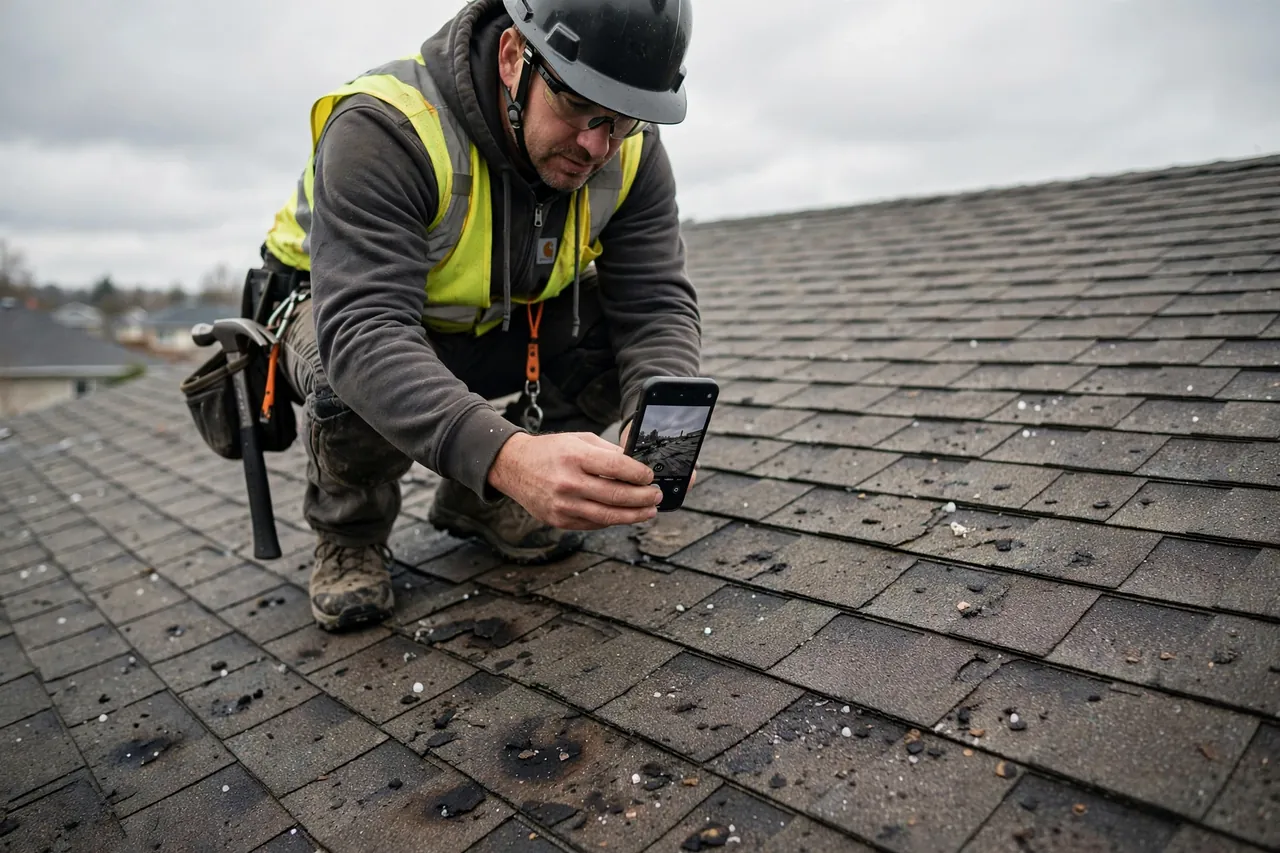
When a nor’easter or summer thunderstorm tears through Wilmington, the hours afterward matter more than most homeowners realize. What you document, how you prevent further damage, and what you tell your insurer in the first days can shape the entire outcome of a roof storm damage insurance claim. This guide walks through the process step by step — what to do, what adjusters actually look for, and where the common mistakes happen.
One important note up front: we are roofers, not insurance professionals. Nothing here is a promise about coverage, claim approval, or payout amounts — those depend on your policy, your carrier, and the facts of the damage. What we can give you is the roofer’s side of the process: how damage gets documented properly, what distinguishes storm damage from wear, and how to avoid the missteps we see homeowners make after every major storm season.
What should I do right after storm damage?
First, stay safe. Do not climb onto a storm-damaged roof — decking may be compromised, slopes are slick, and downed lines or loose branches add hazards you cannot see from the ground. Keep family and pets clear of areas where debris fell, and if water is coming in, move valuables and contain it with buckets and towels.
Second, document everything before anything gets moved or repaired. Photograph and video the damage from the ground: missing or lifted shingles, dents, fallen branches on the roof, damaged gutters. Capture wide shots showing the whole slope plus close-ups of specific damage. Note the date and time — most phones timestamp automatically, which is exactly what you want.
Third, prevent further damage. Insurers generally expect homeowners to take reasonable steps to stop a bad situation getting worse — covering a breached section with a secured tarp, for example. This is mitigation, not repair: do the minimum needed to keep water out, keep receipts for anything you buy or hire, and do not start permanent repairs before the damage is documented. If the breach is beyond a safe DIY tarp job, call for emergency roof repair — emergency tarping and stabilization is precisely what that service exists for.
How do I document roof damage properly?
Good documentation has three qualities: it is prompt, it is thorough, and it connects the damage to the storm. Start outside: photograph each affected slope from multiple angles, get close-ups of lifted, creased, or missing shingles, hail impacts, and damaged flashing, vents, or gutters. Include something for scale where it helps — a coin next to hail bruising, for instance.
Then document inside: ceiling stains, wet insulation, water paths in the attic. Attic photos are powerful evidence because they show water entry that is not visible from outside. Write down what you observed and when — "water dripping in the upstairs bedroom during the storm, approximately 9 PM" — while it is fresh. Keep a simple log: date, what you saw, who you called, what was said.
Finally, preserve the chain: do not throw away damaged shingles or materials that blew off; bag and keep a few. If a roofer inspects before the adjuster arrives, ask for a written report with photos mapping damage slope by slope. That independent documentation becomes part of your file and is far more useful than verbal descriptions later.
What do insurance adjusters look for?
Adjusters are trying to answer one question: was this damage caused by the storm event, or is it wear and tear? They look for the signatures of sudden damage. Wind damage shows as creased, lifted, or missing shingles — often in patterns matching the storm’s direction — and damaged ridge caps. Hail shows as bruising: dark spots where granules were knocked off, sometimes with cracked fiberglass mat underneath, distributed across slopes in a random pattern.
They also assess the roof’s age and pre-existing condition. A twenty-year-old roof with widespread granule loss and curling will be read differently than a seven-year-old roof with crisp, localized impact damage. This is not unfair — it is the wear-versus-storm distinction that sits at the heart of every property claim. Maintenance records, prior inspection reports, and photos of the roof’s pre-storm condition all help establish the baseline.
Be present if you can when the adjuster inspects, and have your roofer’s documentation ready. You do not need to argue the claim on the roof — just make sure the adjuster sees everything, including attic evidence and any damage to gutters, siding, or vents that corroborates the storm’s path.
What is the difference between storm damage and wear and tear?
This distinction decides claims, so it is worth understanding cold. Storm damage is sudden, accidental, and tied to an event: shingles the wind lifted last Tuesday, hail bruises from Saturday’s storm. Wear and tear is gradual: granules washing off over fifteen years, sealant drying out, a pipe boot cracking from age, moss slowly prying shingles apart.
In practice the two often coexist on the same roof — a twelve-year-old roof can take genuine hail damage, and the hail damage is still hail damage. The adjuster’s job is to separate them; your documentation’s job is to make the storm’s contribution undeniable. Date-stamped photos from right after the event, the storm’s official record (National Weather Service reports for New Castle County are public), and a roofer’s slope-by-slope damage map are the three legs that hold the distinction up.
A common gray area: a storm exploits a pre-existing weakness — say, wind tears off shingles that were already poorly sealed from age. Outcomes there vary by policy and carrier, which is exactly why precise documentation of what the storm did, specifically, matters so much.
How long do I have to file a claim?
Promptly — and then check your policy for the actual deadline. Most homeowner policies require "prompt" notice of damage, and many specify a filing window that can be as short as months, not years. Delaware does not set a single universal deadline; it lives in your policy language, so read the "duties after loss" section or ask your agent directly.
The practical advice is simpler: do not wait. Damage documented and reported within days is clean — the storm is a matter of public record, the evidence is fresh, and the timeline is unambiguous. Claims filed a year later invite questions about intervening weather, worsening from neglect, and whether the damage is even from the claimed event. After any major storm in the Wilmington area, assume the clock is running and act within days, not months.
Also note the repair clock: once a claim is approved, policies typically expect repairs within a reasonable time. Emergency mitigation (tarping, stopping active leaks) should happen immediately regardless — waiting on paperwork while water keeps entering only multiplies the damage.
Should I get a roofer’s inspection before the adjuster comes?
Yes — and the order matters. A roofer’s inspection before the adjuster visit gives you an independent, detailed record of what the storm did: which slopes, what type of damage, how extensive. That report does not decide your claim, but it means you walk into the process informed rather than guessing.
What a roofer can do: document damage with photos, distinguish storm signatures from pre-existing wear, provide a written scope of needed repairs, and perform emergency mitigation. What a roofer cannot do: promise your claim will be approved, interpret your policy’s coverage, or negotiate with your carrier on your behalf — those are insurance matters. Be wary of any contractor who guarantees claim outcomes or offers to "handle everything with insurance" for you; that is a red flag, not a service.
If the adjuster’s assessment and your roofer’s documentation disagree substantially, that is the point where a second look — sometimes called a re-inspection — can be requested through your carrier’s process. Having thorough initial documentation is what makes that possible.
What if my claim is denied or underpaid?
First, understand why. Denials and low estimates usually come with an explanation: wear and tear rather than storm damage, damage below the deductible, or scope disagreements (the carrier agrees some damage exists but prices the repair lower than your roofer does). Get the reasoning in writing — you cannot respond to a vague "no."
Common next steps, in order: ask the adjuster to walk through the reasoning with you, pointing to your documentation where it contradicts their findings. Request a re-inspection, especially if you have new evidence — additional photos, your roofer’s detailed report, or damage discovered after the first visit. Review your policy’s appraisal or dispute provisions; most policies include a formal process for resolving valuation disagreements.
Throughout, keep everything in writing and keep repairing on hold only where the carrier requires it — emergency mitigation to stop active water entry should never wait on a dispute. And keep perspective: a denied claim does not change the physical reality of a damaged roof. Whether insurance covers it or not, a breached roof needs repair before the next storm finds the same weak spot. Our leak repair assessments document the damage either way, so you have the facts whatever path the claim takes.
What records should I keep after the storm?
Start a simple claim file — physical folder or digital, it does not matter — and put everything in it. The storm date and weather reports. All photos and videos with timestamps. Your roofer’s written damage report. Every piece of correspondence with the insurer: claim number, adjuster’s name and contact, dates of calls and what was said. Receipts for emergency mitigation — tarps, emergency service calls. Notes from the adjuster’s visit.
Keep the file until the claim is fully closed and repairs are complete and paid. Disputes sometimes surface months later — a supplement for hidden decking damage found during repairs, for example — and a complete file turns those from arguments into paperwork. Homeowners who keep clean records consistently report smoother processes than those reconstructing timelines from memory. It is a small habit with an outsized payoff.
Frequently Asked Questions
What should I do first after storm damage to my roof? Stay off the roof, document everything with timestamped photos and video from the ground, take reasonable steps to prevent further water entry, and notify your insurer promptly. Do not begin permanent repairs before the damage is documented.
How do I prove roof damage was caused by the storm? Date-stamped photos taken right after the event, the storm’s public weather record for New Castle County, attic photos showing fresh water entry, and a roofer’s written slope-by-slope damage report together build a strong record.
What do insurance adjusters check on a damaged roof? They look for sudden-damage signatures — wind-creased or missing shingles, hail bruising — and assess the roof’s age and pre-existing condition to separate storm damage from wear and tear. Attic evidence and damage to gutters or vents corroborate the storm’s path.
Is wear and tear covered by homeowners insurance? Generally no — policies cover sudden, accidental damage, not gradual deterioration like aging shingles, dried sealant, or long-term moss damage. This is why documenting what the storm specifically did, versus pre-existing condition, is so important.
How long do I have to file a roof damage claim in Delaware? Policies require prompt notice and many set specific filing windows, so check your policy’s "duties after loss" section or ask your agent. Practically, file within days of the storm while evidence is fresh and the event is a matter of public record.
Should a roofer inspect before the insurance adjuster? Yes. An independent roofer’s report with photos, taken before the adjuster visit, documents the damage objectively and gives you a detailed record. A roofer cannot promise claim approval or interpret your policy, though.
What if my claim is denied? Get the reasoning in writing, walk through it against your documentation, and ask about re-inspection or your policy’s dispute and appraisal provisions. Keep all correspondence written, and do not delay emergency mitigation while a dispute plays out.
Can I choose my own roofer for insurance repairs? Generally yes — you choose the contractor; the carrier settles the claim according to your policy’s terms. Be cautious of anyone who pressures you to sign over claim benefits or insists you must use their preferred company. Get the scope in writing and keep your documentation independent.
Storms are chaotic; your response does not have to be. Document fast, mitigate further damage, and get an independent professional assessment before the adjuster arrives — those three steps put you in the strongest position whatever your policy decides. If a storm has hit your Wilmington roof, call The Roof Medics at (302) 445-8567 for emergency tarping and a thorough damage assessment.