Roof Leaking During Rain? What to Do Now
Water is coming in and the rain is not stopping. Here is what to do right now, what to avoid, and how to get the leak properly fixed.
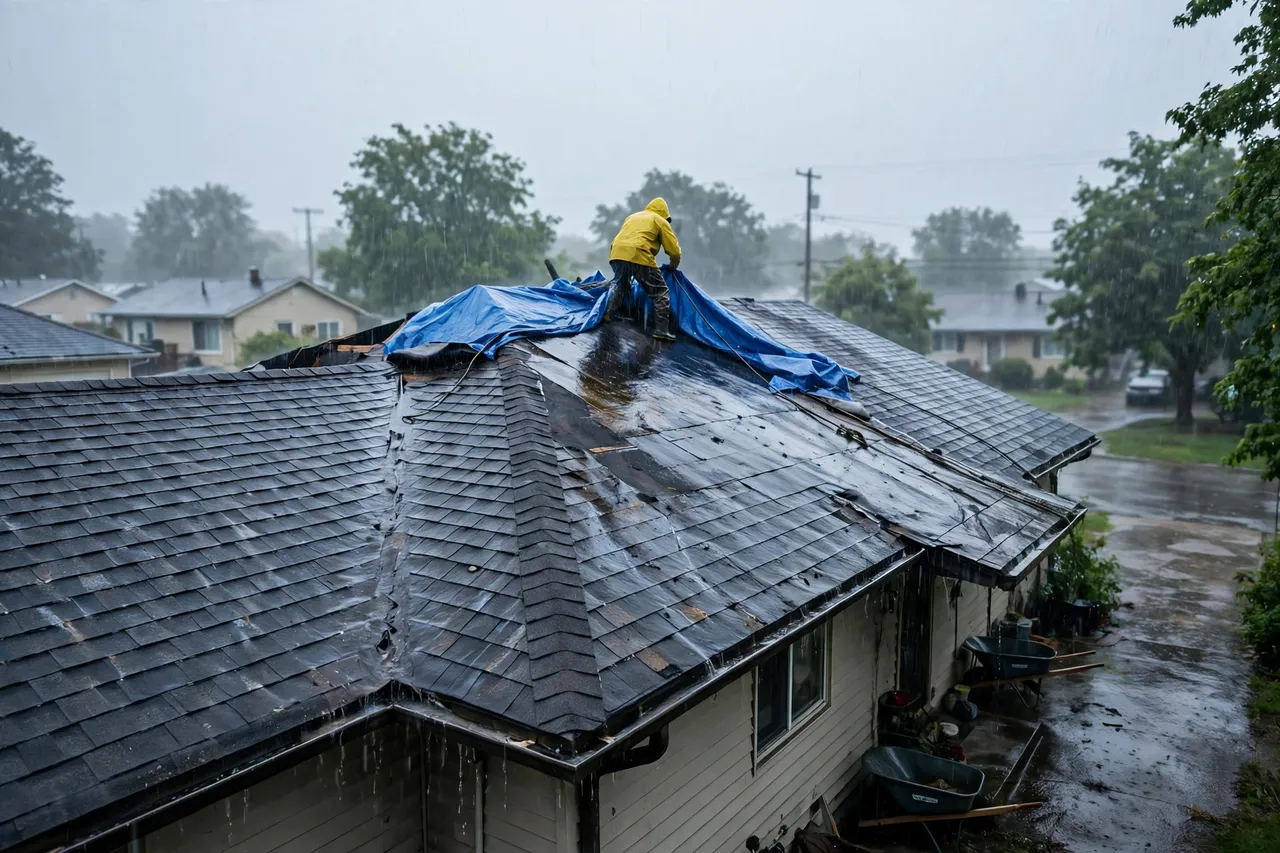
Few household moments are as stressful as watching water drip from your ceiling while rain hammers the roof above it. The instinct is to fix it immediately, and that instinct is understandable — but the middle of a storm is the wrong time for roof work. The right moves in the first hour are about limiting damage inside the house and keeping everyone safe, not about climbing onto a wet roof. A leak that is managed well for a few hours is a repair job. A leak that is ignored, or handled badly, becomes damaged ceilings, soaked insulation, and warped flooring.
This guide covers the order of operations: what to do inside the moment you spot the leak, what not to do even though it feels helpful, how to make a safe temporary cover if conditions allow, and when the situation calls for emergency help rather than waiting for the rain to pass. It is written for Wilmington homes, where nor’easters and summer downpours deliver the heaviest rain, but the steps apply to any roof leak in any storm.
What should you do first inside the house?
Contain the water. Place a bucket or large container under the drip, and put towels around it to catch splashes. If the drip is steady, a bucket with a towel draped over its rim catches water quietly and prevents splashing onto the floor. Move furniture, electronics, rugs, and anything valuable out of the drip zone, and pull back curtains near the affected wall. Water spreads further than the drip point suggests, especially along ceiling joists and inside wall cavities.
If the leak is coming through a light fixture, turn off the power to that circuit at the breaker panel before doing anything else. Water and electricity are a dangerous combination, and a fixture full of water can short or fall. Do not touch a wet switch or fixture with wet hands. If you are unsure which breaker controls the fixture, turn off the main breaker for that area and wait for daylight to sort it out.
Watch the ceiling itself. A ceiling that is sagging or bulging has trapped water above it, and that water is heavy. Stay clear of the bulge, move everything from beneath it, and do not poke or puncture it to drain it. A controlled drain is a job for someone who can see what is above the ceiling and manage the water safely. A bulging ceiling that gives way on its own can dump gallons of water and soaked plaster at once.
What should you NOT do during the storm?
Do not climb onto the roof. This is the most important rule, and it is the one most often broken. A wet roof is slick, visibility is poor, and wind gusts during a storm can throw a person off balance. Wilmington’s older homes often have steep pitches that are dangerous even in dry weather. No leak is worth a fall. Roof work waits until the rain stops and the surface dries.
Do not apply sealant, tar, or caulk to the roof in the rain. These products do not bond to wet surfaces, so the effort achieves nothing, and the smeared material makes the eventual proper repair harder, because a roofer has to cut through or work around it to reach the real failure. The same goes for climbing a ladder to smear anything on from the edge. Save the ladder work for dry conditions and a clear plan.
Do not ignore a small drip because it seems minor. A drip that appears small inside can represent a much larger volume of water entering the roof system, most of which is being absorbed by insulation and decking before it finds its way through the ceiling. Small drips deserve the same containment and the same prompt call as large ones. And do not place a container in the attic directly under the leak and forget about it — attic containers overflow, and the water they spill soaks insulation silently.
How can you find where the water is coming from?
You usually cannot find the entry point during the storm, and you do not need to. Water travels: it enters at a failed flashing, a lifted shingle, or a valley gap, then runs downhill under the shingles and along the decking until it finds a seam or a nail hole to drip from. The stain on your ceiling may be ten or fifteen feet from the actual breach. Chasing the entry point from inside during a storm mostly produces wrong guesses.
What you can do is observe and note. Which room is affected, and where exactly on the ceiling? Did the leak start with the wind-driven rain from a particular direction, or only after hours of steady rain? Does it drip steadily or only in gusts? Those observations help a roofer later, because wind-driven leaks point toward flashing and laps on the windward side, while leaks that start after prolonged rain point toward saturated underlayment or a slow valley failure.
If you have safe attic access and the attic floor is stable, a careful look with a flashlight can help — but only if you can do it without stepping through the ceiling or touching wet wiring. Look for the highest wet point on the underside of the decking and for staining on rafters. Do not move insulation around while it is wet, and do not enter an attic with sagging drywall below. When in doubt, stay out and let the roofer trace it.
Can you put a tarp over the leak during the rain?
A tarp is the one outside measure that can help during a storm, but only when it can be done safely from a ladder or from the ground, without stepping onto the roof. A tarp draped over the affected area and weighted down with boards or sandbags — never nailed through good shingles — can slow water entry until a proper repair is possible. Nailing a tarp through sound shingles creates new holes that will leak later, so weights, not nails, are the rule.
In practice, tarping during heavy rain and wind is difficult and often unsafe. A large tarp catches wind like a sail, and handling one on a ladder in a storm is a good way to fall. If the wind is strong, the rain is heavy, or the affected area is high or steep, skip the tarp and focus on containing water inside. A tarp placed badly is worse than no tarp at all, because it can channel water into places it would not otherwise reach.
If conditions do allow a tarp, extend it well beyond the suspected area on all sides, with the top edge tucked as high as practical so water runs over it rather than under it. Even a well-placed tarp is a temporary measure measured in days, not weeks. It needs to be followed by a proper diagnosis and repair, because the leak underneath it is still there. For a tarp placed safely and quickly, emergency roof tarping is the service to ask for once conditions allow a crew to work.
When should you call for emergency roof repair?
Call for emergency roof repair when water is actively entering the home and you cannot contain it, when a ceiling is bulging or sagging, when water is near electrical fixtures, or when part of the roof has visibly failed — missing shingles over a large area, a fallen tree limb through the roof, or a section of roof deck that has collapsed. Those are not wait-until-morning situations. Water inside a home damages structure, insulation, and finishes quickly, and the damage grows with every hour of rain.
Call promptly, even if the leak seems contained, when the forecast promises more rain. Wilmington storms often arrive in trains: a nor’easter can bring two or three days of rain, and a roof that leaks on day one will leak worse on day two as the decking saturates. A roofer who can tarp or temporarily seal the breach between bands of rain can prevent a second, larger round of interior damage.
When you call, be ready to describe what you see: which rooms are affected, how fast the water is coming in, whether any ceiling is bulging, and whether the roof has visible damage from the ground. That information helps the crew bring the right materials and prioritize your call among other storm calls. And if water is near wiring or a ceiling is sagging badly, say so first — those details change how urgently a crew responds.
What happens after the rain stops?
Once the rain stops and the roof dries, the real work begins: finding the entry point. A roofer will start in the attic, tracing staining on the underside of the decking uphill to the highest wet point, then confirm from the roof surface. The usual suspects, in order, are pipe boots and vent flashing, chimney and wall flashing, valleys, skylight curbs, and finally the field shingles themselves. Most leaks trace to a flashing detail, not to the middle of a shingle field.
Drying matters as much as the repair itself. Wet insulation loses its insulating value and feeds mold growth if it stays damp. Wet decking softens and rots. After the roof is repaired, the attic and any wet ceiling cavities need to dry thoroughly, and insulation that stayed soaked may need to be removed and replaced. Ask the roofer what got wet and what needs drying — a repair that seals the roof but leaves a soaked attic half-dried stores up a mold problem for later.
A proper roof leak repair replaces the failed detail rather than covering it: a cracked pipe boot gets replaced, failed step flashing gets removed and reinstalled with new shingles woven in, damaged decking gets cut out. That is the difference between a leak that is fixed and a leak that returns with the next storm.
What are the most common leak sources in heavy rain?
Flashing failures lead the list. Pipe boots — the rubber collars around vent pipes — crack with age and sun, and a cracked boot lets rain run straight down the pipe into the attic. Chimney flashing, the metal that seals where a chimney meets the roof, fails when its sealant ages or its counterflashing loosens. Wall flashing, where a roof meets a taller wall, fails when its step flashing corrodes or was installed without proper overlap.
Valleys are next. A valley channels water from two slopes into one stream, so it carries more water than any other part of the roof. Debris in a valley — leaves, twigs, granules — dams that stream and pushes water sideways under the shingles. Wilmington’s tree-lined streets make valley debris a regular problem, especially in autumn when leaves fall faster than gutters and valleys can shed them.
Skylights and roof penetrations round out the list. Skylight curbs rely on flashing kits and sealant, both of which age, and a skylight that leaks only in wind-driven rain usually has a flashing problem on its uphill side. Ice-and-water shield membrane under valleys and around penetrations is the backup layer that catches what the primary layer misses — but only if it was installed there in the first place. On older Wilmington roofs, that backup layer is sometimes absent, which is why a single flashing failure becomes an interior leak so quickly.
How do you prepare for the next storm?
After a leak is repaired, the best preparation for the next storm is a walk-around before it arrives. Clear gutters and downspouts so water drains instead of backing up under the eaves. Clear valley debris if it can be reached safely from a ladder. Trim branches that overhang the roof, since they drop debris and can break onto the roof in wind. These are small jobs, but they remove the two most common leak accomplices: standing water and debris dams.
Know your roof’s weak points. If a previous leak traced to a chimney flashing or a valley, that detail deserves a look before each storm season, not after the next leak. A roof inspection ahead of Delaware’s storm season — late summer, before the autumn nor’easters — catches the cracked boots and lifted shingles while they are still simple to fix.
Finally, keep the number of a local roofer somewhere you can find it in the dark, in the rain, with water dripping on your floor. The worst time to search for help is during the emergency itself. A leak plan is simple: contain the water, protect the electrics, stay off the roof, and call. Everything else can wait for daylight.
Frequently Asked Questions
What is the first thing to do when my roof leaks during rain? Contain the water inside: place a bucket under the drip, move furniture and valuables out of the way, and put towels around the container. If water is near a light fixture, turn off power to that circuit at the breaker panel first.
Should I go onto my roof during a rainstorm to fix a leak? No. A wet roof is slick, visibility is poor, and wind gusts can throw you off balance. Roof work waits until the rain stops and the surface dries. Focus on containing water inside instead.
Can I put a tarp on a leaking roof while it is raining? Only if it can be done safely from a ladder or the ground, without stepping onto the roof, and weighted down rather than nailed through good shingles. In strong wind or heavy rain, skip the tarp and contain the water inside.
Why does my ceiling bulge when the roof leaks? A bulging ceiling has trapped water above it, and that water is heavy. Stay clear, move everything from beneath it, and do not poke or puncture it. A controlled drain is a job for someone who can manage the water safely.
Why does the leak stain appear far from where water enters? Water travels under the shingles and along the decking until it finds a seam or nail hole to drip from. The ceiling stain can be ten or fifteen feet from the actual breach, which is why diagnosis starts in the attic, not at the stain.
Will a leak stop on its own when the rain stops? The dripping stops, but the damage does not. The failed flashing or shingle is still there, and the wet decking and insulation still need to dry. A leak that is not repaired will return with the next storm, usually worse.
When is a roof leak an emergency? When water is actively entering and cannot be contained, when a ceiling is bulging or sagging, when water is near electrical fixtures, or when part of the roof has visibly failed. Those situations call for emergency help, not a wait until morning.
If your roof is showing any of the signs described here, or you would like a professional look at its condition, call The Roof Medics at (302) 445-8567. We will find the real source of the problem and lay out your repair options plainly.