How to Prepare Your Delaware Roof for Winter
Winter finds every weakness a roof has. A careful autumn check catches them while they are still easy to fix.
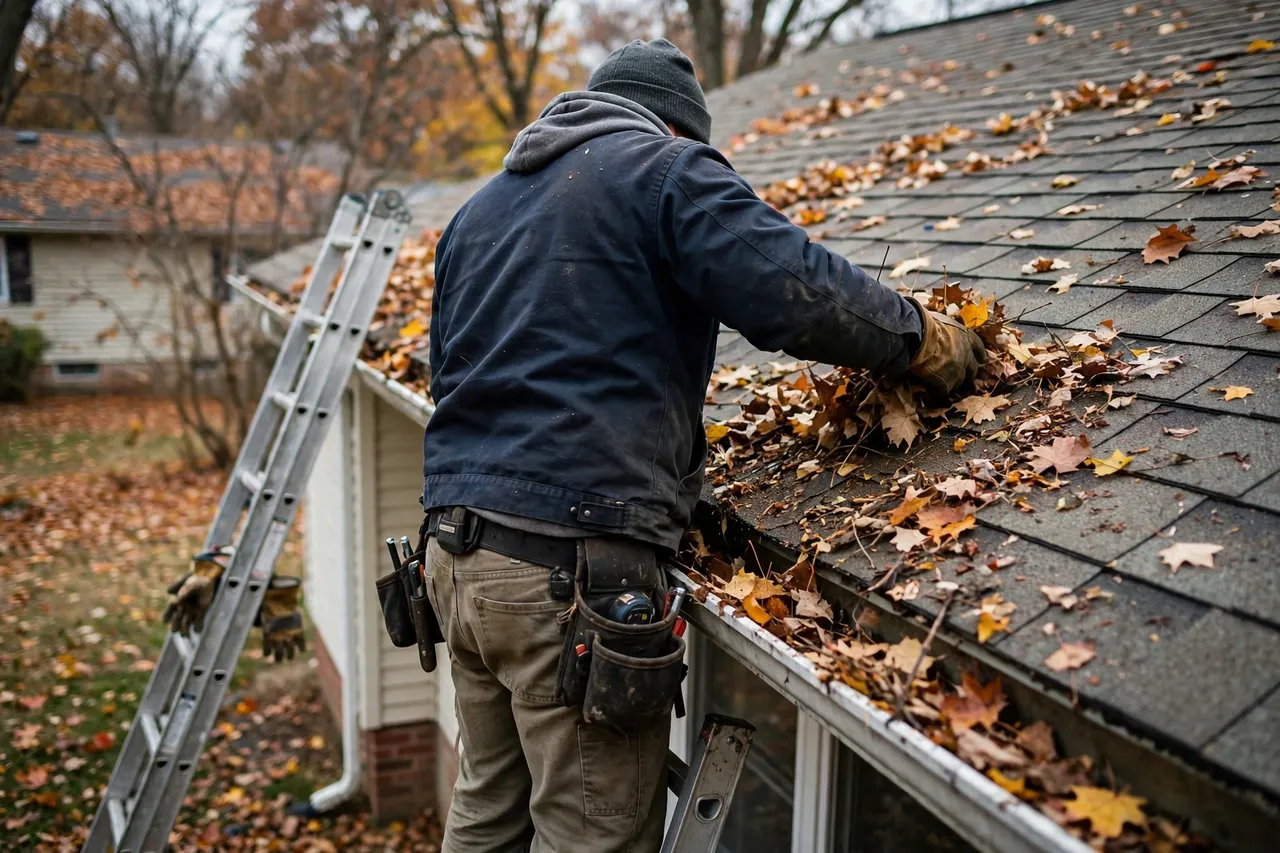
Delaware winters do not arrive with a single dramatic freeze. They arrive as a long series of small stresses: a cold snap, a thaw, a nor’easter dumping wet snow, another freeze, another thaw. Each freeze-thaw cycle works on shingles, sealants, and flashings, prying at anything already loose. Add the occasional ice dam at the eaves and a wind-driven snow that finds its way under lifted shingles, and winter becomes the season that turns small roof problems into interior damage.
The good news is that winter roof problems are largely predictable, and most of them are preventable with a careful check in autumn. The checklist below covers the items that matter most for Wilmington roofs: the gutters that carry water away, the shingles and flashing that keep it out, the attic conditions that prevent ice dams, and the trees and drains that cause trouble when they are ignored. Work through it before the first sustained freeze, and your roof will face winter with its defenses intact.
Why is Delaware winter hard on roofs?
Delaware sits in a freeze-thaw zone, which is harder on roofs than a consistently cold climate. In a deep-freeze climate, snow sits on the roof and stays frozen. In Delaware, temperatures swing above and below freezing repeatedly through the winter, and every swing is a small mechanical event. Water trapped in a tiny crack freezes, expands, and widens the crack. Sealant that flexed in the warmth stiffens in the cold and cracks. Shingles that sealed in summer lose adhesion as they contract in cold.
Nor’easters add wind and wet snow to the mix. Delaware’s signature winter storm drives snow sideways under shingle laps and into any gap in flashing, and wet snow is heavy — a deep, wet snowfall loads a roof far more than the same depth of light powder. Roofs with existing weaknesses, a lifted valley shingle or a cracked pipe boot, are the ones that leak during a nor’easter, because wind-driven snow reaches places that ordinary rain never touches.
Ice dams complete the trio. When attic heat melts snow on the upper roof and the meltwater refreezes at the cold eaves, a dam of ice builds up and traps subsequent meltwater behind it. That trapped water has nowhere to go but under the shingles, and it will find its way into the attic and the walls below. Ice dams are a ventilation and insulation problem as much as a roofing problem, which is why the attic section of this checklist matters as much as the roof surface section.
What should you check on the roof surface before winter?
Start with the shingles, from the ground with binoculars or from a ladder at the eaves — not by walking the roof. Look for shingles that are curled, cracked, or missing, and for any area where the shingle pattern looks disturbed, which suggests wind damage from an earlier storm. A single missing shingle before winter becomes a leak during the first wind-driven snow, because snow works under the exposed course and melts into the underlayment.
Check the flashing details next, because they fail first in winter. Pipe boots, the rubber collars around vent pipes, crack with age and cold, and a cracked boot is an open hole once snow melts around it. Chimney flashing, valley flashing, and the step flashing where a roof meets a wall all rely on sealant and metal that contract in cold. Any flashing that is lifted, rusted, or missing sealant deserves attention before the freeze-thaw cycles start working on it.
Skylights deserve a specific look. Skylight curbs and their flashing kits are common winter leak points, especially when snow piles against the curb and melts slowly. Check for cracked sealant around the curb and for any staining on the interior frame, which suggests a leak that has already begun. A skylight that leaked slightly in autumn rain will leak substantially in winter meltwater.
Why do gutters matter so much in winter?
Gutters are the roof’s drainage system, and in winter they are also its ice dam factory. A gutter full of autumn leaves traps water, and that trapped water freezes into a solid block at the eaves. The ice block backs subsequent meltwater up onto the roof, under the shingles, and into the attic. Clearing gutters in late autumn, after most leaves have fallen, is the single most effective winter preparation a homeowner can do.
Downspouts matter as much as gutters. A clear gutter with a clogged downspout still backs up, and a downspout that discharges right at the foundation can create ice sheets on walkways and saturate the soil near the house. Check that downspouts run clear and discharge well away from the foundation, and that any extensions are attached before the ground freezes. A gutter repair in autumn — rehanging a sagging section, resealing a leaking joint, replacing a crushed downspout — is a small job that prevents a large winter problem.
Gutter guards help but do not eliminate maintenance. Fine-mesh guards keep leaves out but can themselves ice over in a freeze, forming a bridge that sends water over the gutter edge instead of into it. If your home has gutter guards, check them before winter for debris sitting on top and for any section that has lifted or sagged. A guard that has become a shelf for wet leaves is worse than no guard at all.
How do attic conditions prevent ice dams?
Ice dams form when the roof deck is warm in the middle and cold at the eaves. The warmth comes from the attic: heated air from the living space below rises into the attic and warms the deck, melting snow on the upper roof. The meltwater runs down to the eaves, which extend beyond the heated house and stay cold, and refreezes there. The solution is to keep the deck uniformly cold, and that takes two things: insulation that keeps house heat out of the attic, and ventilation that carries away any heat that does get in.
Before winter, check the attic for the signs of a heat leak. Look for insulation that is thin, patchy, or compressed, especially near the eaves, where insulation is often pushed aside or missing entirely. Look for gaps around light fixtures, attic hatches, and pipe chases, which are the main paths for warm air into the attic. Sealing those gaps and topping up thin insulation are autumn jobs that pay off all winter, not just in ice dam prevention but in heating comfort as well.
Ventilation is the other half. Soffit vents must be open, not buried under insulation, and ridge vents must be clear, so air can flow from eave to ridge and carry heat out. A roof ventilation repair before winter — clearing blocked soffits, installing baffles to keep the airflow channel open — is one of the most effective ice dam measures available. Our guide to ice dams on Delaware roofs explains the full cycle in more detail.
What about trees, valleys, and flat roof drains?
Overhanging branches are a winter hazard in two ways. Heavy, wet snow loads branches and snaps them onto the roof, and ice-laden limbs can fall even without snow. Branches that touch the roof also drop debris into valleys and gutters all autumn, and they abrade shingles in the wind. Before winter, trim any branch that overhangs the roof or could reach it if it fell. This is a job for someone with proper equipment when the branches are large or near power lines.
Valleys deserve a specific autumn check. A valley channels water from two slopes, and in winter it channels meltwater and slush. Leaves and debris trapped in a valley dam that flow and push water sideways under the shingles. Clear valley debris if it can be reached safely from a ladder, and look for any valley shingle that is lifted or cracked, since valleys are the first place wind-driven snow enters.
Flat roofs have their own winter item: drains and scuppers. A flat roof drain clogged with autumn leaves turns the first winter rain or melt into ponding water, and ponding water that freezes stresses seams and flashings with each cycle. Clear flat roof drains and scuppers in late autumn, and check that drain strainers are in place. A flat roof that ponds before winter will pond worse through it.
What should you do during winter itself?
Winter maintenance is mostly observation. After a heavy snow, look at the roof from the ground. Snow that melts in patches — bare spots in the middle of the roof while the eaves stay snow-covered — suggests attic heat is escaping and warming the deck, which is the early warning of ice dam conditions. Icicles along the eaves are normal in small numbers, but thick, persistent ice ridges at the eaves, or icicles forming behind the gutter rather than from it, suggest water is backing up.
Inside, watch for the signs of a winter leak: stains on upstairs ceilings that appear after a thaw, paint bubbling on the top-floor walls, or a musty smell in rooms below the roof. Winter leaks often appear not during the storm but during the thaw that follows, when trapped snow and ice melt and find the gaps they created. A stain that appears after a thaw deserves the same prompt attention as a stain during rain.
Do not try to remove snow or ice from the roof yourself. Roof rakes used from the ground can damage shingles and gutters, and climbing onto a snowy or icy roof is dangerous. If ice dams are causing active leaking, the safe response is to contain the water inside and call a professional, who can steam or carefully remove the dam without damaging the roof. Chipping at ice with tools damages shingles and creates new leak points.
When should a professional check the roof before winter?
A professional roof inspection before winter is worthwhile whenever the roof is past about fifteen years old, whenever it has leaked before, whenever it has taken storm damage during the year, or whenever you cannot safely check the items on this list yourself. An inspection covers the details that are hard to see from the ground: the condition of pipe boots and flashing, the state of the valleys, whether shingles still seal, and whether the attic shows the moisture or heat patterns that predict ice dams.
Timing matters. Late summer through early autumn is the ideal window, because it leaves time to complete any repairs before the first sustained freeze, and because roofers’ schedules fill quickly once the first cold snap arrives. An inspection in November that finds a failed flashing leaves little margin before winter weather makes the repair itself difficult.
Think of a pre-winter inspection as the roof equivalent of servicing a car before a long trip. The roof is about to face its hardest months, and the items that fail in winter are almost always items that were already weak in autumn. Finding them in October, when they are easy to fix, is far better than finding them in January, when they are leaking into a bedroom.
What is the simplest pre-winter checklist to follow?
If the full list feels like a lot, these are the items that deliver the most protection for the least effort. First, clear the gutters and downspouts after the leaves fall, and confirm they drain away from the house. Second, look at the roof from the ground for missing, curled, or cracked shingles and for any flashing that looks lifted or rusted. Third, check the attic for blocked soffit vents, thin insulation near the eaves, and any sign of moisture or frost from previous winters.
Fourth, trim branches that overhang the roof. Fifth, clear valley debris and flat roof drains if your home has them. Sixth, note any stain or musty smell from last winter and have it checked before this winter, because last winter’s leak is this winter’s leak unless something changed. Those six items cover the failure points that cause the large majority of Wilmington winter roof damage.
Finally, keep a local roofer’s number where you can find it in a storm. Winter roof emergencies — an active leak during a nor’easter, a ceiling bulging with trapped meltwater — are stressful enough without a search for help in the middle of them. Preparation is not just about the roof. It is about knowing what to do, and who to call, when winter finds the one weakness you missed.
Frequently Asked Questions
When should I prepare my roof for winter in Delaware? Late summer through early autumn is ideal, after most leaves have fallen but before the first sustained freeze. That window leaves time to complete any repairs before winter weather makes roof work difficult.
What is the most important winter roof preparation? Clearing gutters and downspouts after leaf fall. A clogged gutter traps water that freezes at the eaves, backs meltwater under the shingles, and feeds ice dams — the chain reaction behind many winter leaks.
How do ice dams form on Delaware roofs? Attic heat melts snow on the upper roof, and the meltwater refreezes at the cold eaves, building a dam that traps further meltwater behind it. That trapped water then works under the shingles. Uniform attic insulation and ventilation prevent the cycle.
Should I remove snow from my roof in winter? No. Roof rakes used from the ground can damage shingles and gutters, and climbing onto a snowy or icy roof is dangerous. If ice dams are actively leaking, contain the water inside and call a professional.
What does patchy snow melt on a roof mean? Bare spots in the middle of the roof while the eaves stay snow-covered suggest attic heat is warming the deck unevenly. That is an early warning of the conditions that build ice dams.
Do gutter guards eliminate winter gutter maintenance? No. Fine-mesh guards can ice over and send water over the gutter edge, and debris sitting on top of a guard still blocks drainage. Guards reduce leaf buildup but still need a pre-winter check.
When should I get a professional pre-winter roof inspection? When the roof is past about fifteen years old, when it has leaked before, when it has taken storm damage during the year, or when you cannot safely check the roof yourself. Late summer to early autumn is the best timing.
If your roof is showing any of the signs described here, or you would like a professional look at its condition, call The Roof Medics at (302) 445-8567. We will find the real source of the problem and lay out your repair options plainly.